GardenTours.com
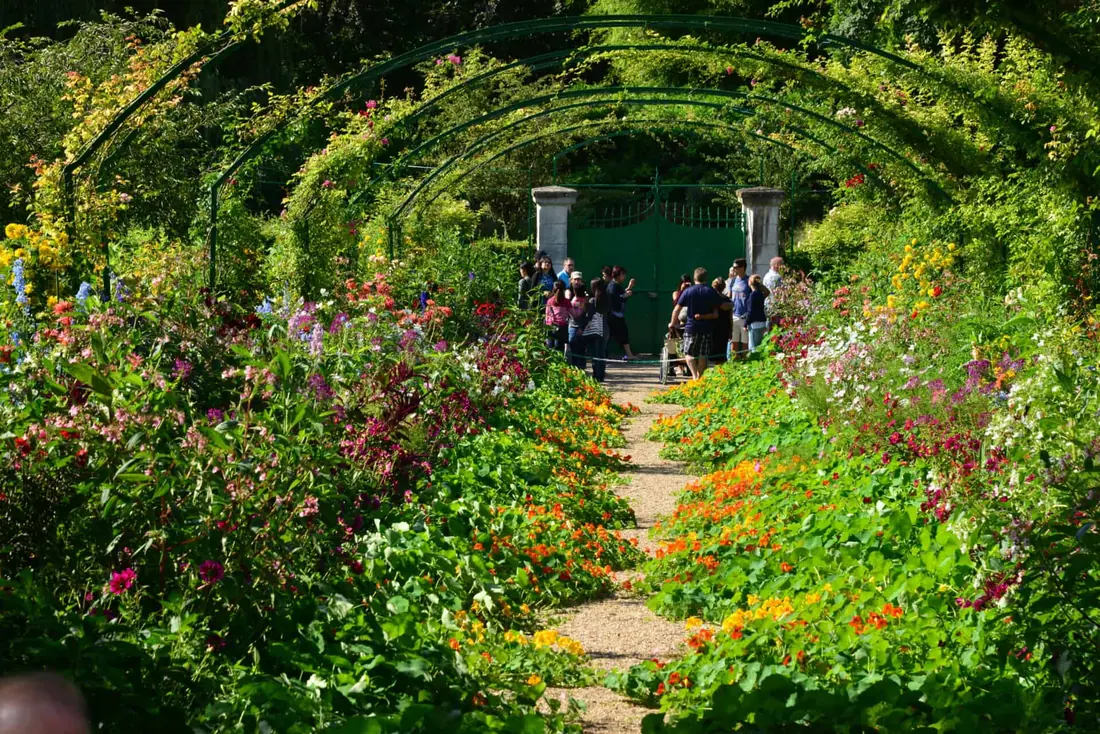
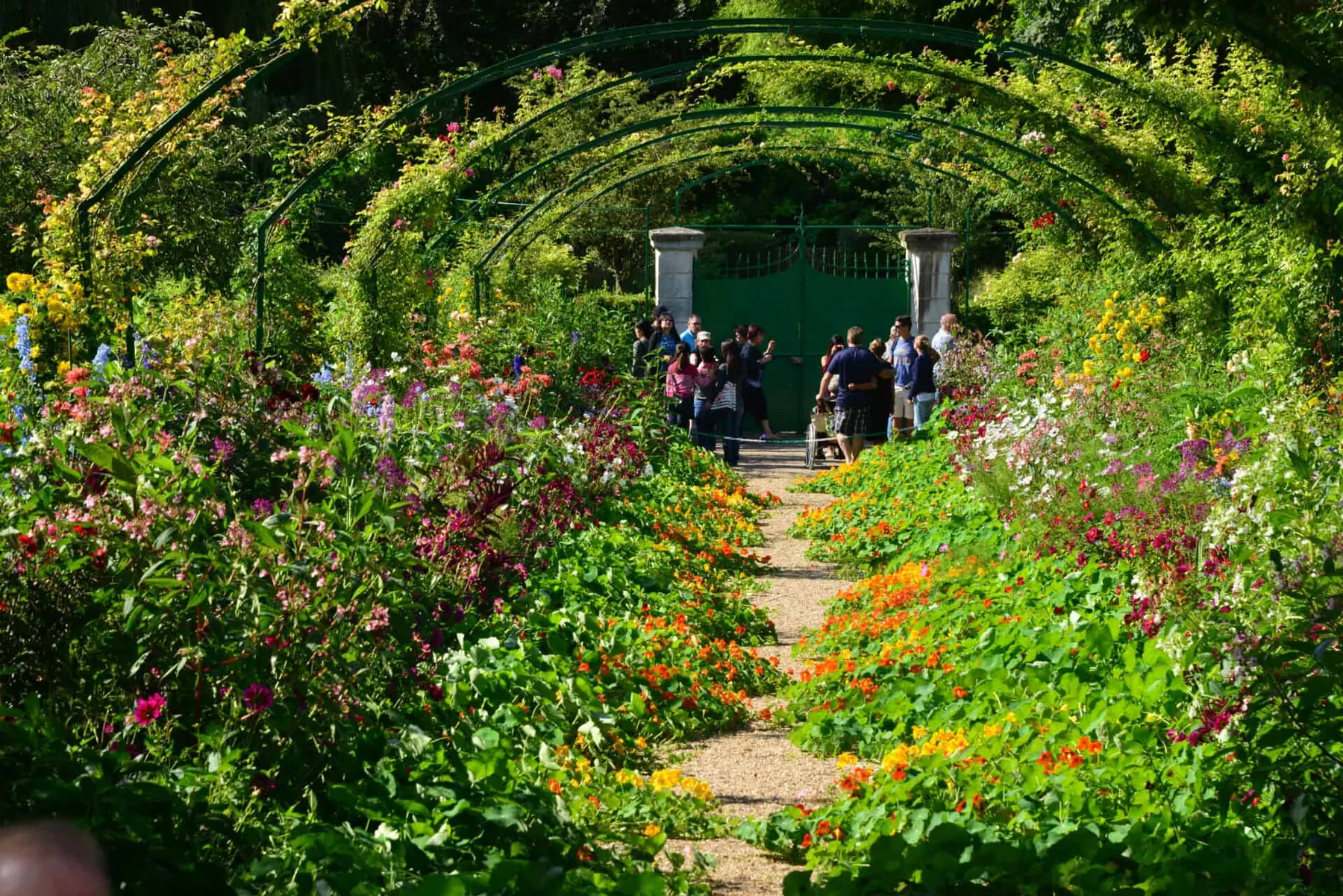
The Grande Allée in Monet's Clos Normand at Giverny, with nasturtiums spilling over the gravel path beneath the green rose arches
Normandy, Giverny & Picardy · 27 June–5 July 2027

Normandy & Giverny Garden Tour 2027

Monet's Giverny, the Arts and Crafts gardens of Le Bois des Moutiers, Miromesnil's walled kitchen garden and the sculpted landscape above Étretat — a nine-day journey through northern France with six nights in Rouen, contemporary planting at Jardin Plume and Agapanthe, and Henri Le Sidaner's garden at Gerberoy.

Tour Price
US$4,500 per person

Deposit: US$1,000

Duration
9 days / 8 nights
Hotels
Sheraton Paris Charles de Gaulle Hotel & Radisson Blu Hotel Rouen Centre
Transport
Air-conditioned private coach
Group size
15–20 guests
Activity level
Moderate
Tour overview

From Monet's Giverny to the gardens of Normandy and Picardy

Northern France offers an unusually rewarding range of gardens within one journey. Around Rouen, private gardens reveal how individual gardeners work with colour, enclosure and collections of plants. On the coast, Le Bois des Moutiers brings together the architecture of Edwin Lutyens and the planting influence of Gertrude Jekyll, while Les Jardins d’Étretat takes a much more contemporary approach to sculpting a landscape. Giverny and Gerberoy connect garden-making with painting, each through a garden shaped by an artist’s eye.

We begin with Monet’s house and gardens at Giverny before settling into Rouen for six nights. From this base, the programme moves between château grounds, productive kitchen gardens and gardens where the planting itself is the principal subject. Guided visits at Le Bois des Moutiers and Château de Miromesnil give us time to consider their history and design. Jardin d’Angélique and Jardin de Valérianes offer a more intimate scale, while Jardin Plume and Agapanthe invite close attention to two distinctly different ways of organising plants and space.

The later days extend into Picardy for Digeon and Maizicourt, followed by Gerberoy and Les Jardins Henri Le Sidaner. These visits broaden the journey beyond Normandy and bring the tour back to the relationship between a garden, its setting and the person who made it.

Late June and early July are a good time to look closely at summer borders, roses and the developing structure of perennial planting. What is in flower will depend on the season; the interest lies as much in the gardens’ design and the way plants are used as in any particular display. Included lunches at four stops and time independently in Giverny, Étretat and Rouen give the journey variety alongside its garden programme.

Day-by-day itinerary

A day-by-day guide to the gardens visited, hotels and the shape of the journey.

The Sheraton Paris Charles de Gaulle Airport Hotel, its curved building rising above the terminal and rail station at dusk
Day 1 · 27 June 2027

Arrival in Paris · Welcome dinner

Dinner included Stay:  Sheraton Paris Charles de Gaulle Hotel

Arrive in Paris and make your way to the Sheraton Paris Charles de Gaulle Hotel for the first night of the tour. The arrival day allows time to settle in after your journey before we travel into Normandy the following morning. Hotel and arrival information will be provided with your travel documents.

This evening, meet your tour leader and fellow travellers over a welcome dinner. It is an opportunity to get to know the group and talk through the days ahead: gardens made by painters, influential examples of garden design, productive château gardens and smaller places shaped by a sustained personal interest in plants.

Our first visit tomorrow is Giverny. Beginning there gives us an artist’s perspective on colour and composition before we explore how other gardeners have approached those same questions in very different settings.

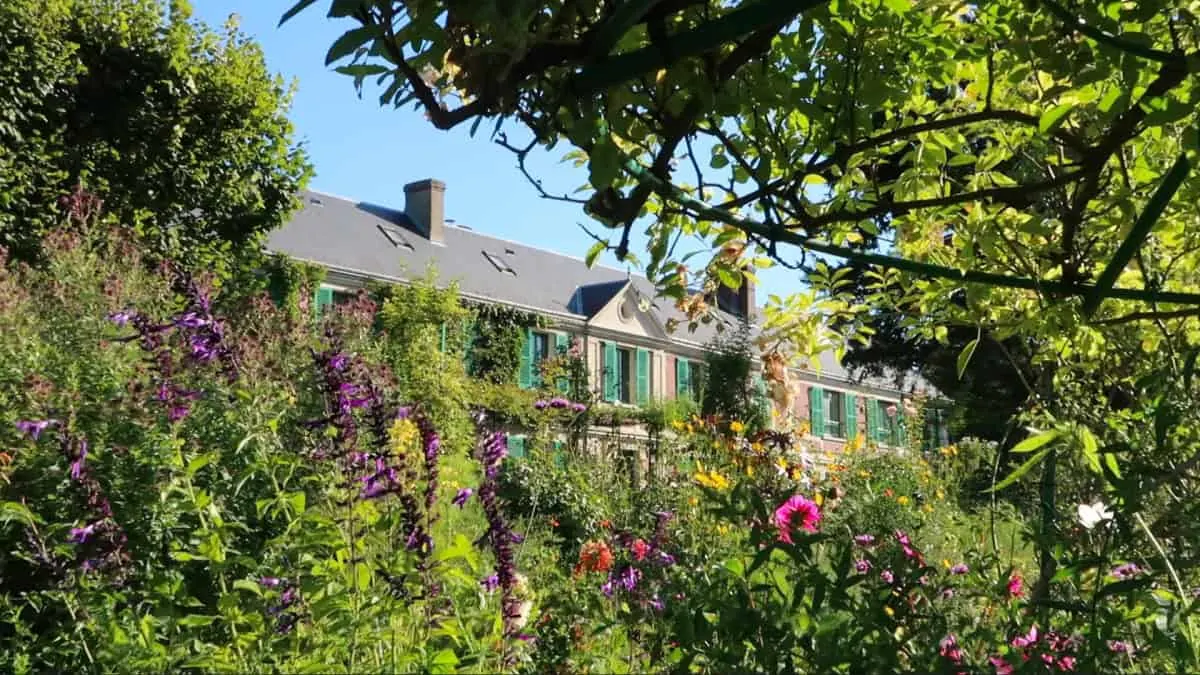
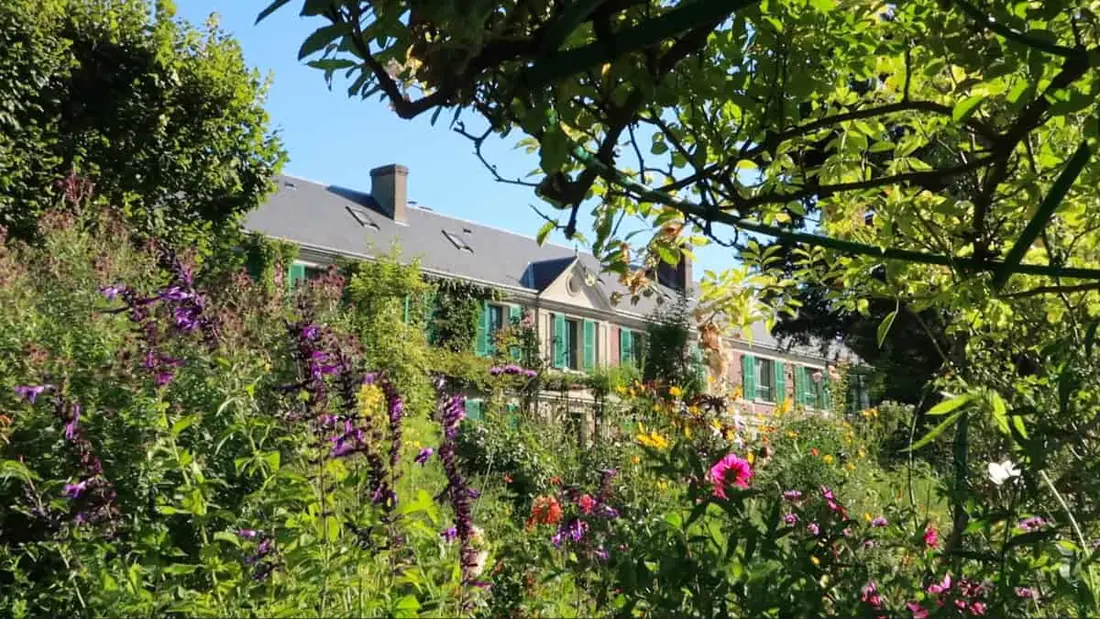
Monet's house at Giverny with its green shutters, seen over the flowering borders of the Clos Normand
Day 2 · 28 June 2027

Monet’s garden at Giverny · Travel to Rouen

Breakfast and dinner included; lunch independently Stay:  Radisson Blu Hotel Rouen Centre

After breakfast, we travel to Giverny to visit Claude Monet’s house and gardens. Monet lived here from 1883 until his death in 1926, developing a garden that became both a place to work with plants and a recurring subject for his paintings. Seeing it in person makes clear how closely his interests as a gardener and an artist were connected.

The Clos Normand, in front of the house, is the flower garden: beds, paths and climbing plants arranged to create depth and changing combinations of colour. It rewards looking beyond individual flowers to the way planting is layered, how one colour meets another and how the view changes as you move through it. The house adds another dimension to the visit, placing the garden in the setting of Monet’s daily life.

The Water Garden has a different character. Around the pond and Japanese bridge, reflections, foliage and the surface of the water become the main subjects. This is the landscape associated with Monet’s water-lily paintings, where the relationship between light and water is as significant as the planting around the edges.

There is time in Giverny for lunch independently. Those who wish may visit the Musée des Impressionnismes during their free time; museum admission is not included in the tour price. You may prefer to spend that time exploring the village or sitting down to lunch without another visit.

We continue to Rouen and check into the Radisson Blu Hotel Rouen Centre, our base for the next six nights. Dinner at the hotel is included this evening.

Day 3 · 29 June 2027

Le Bois des Moutiers · Château de Miromesnil

Breakfast and lunch included; dinner independently Stay:  Radisson Blu Hotel Rouen Centre

Today brings together two gardens with a strong relationship to the houses and landscapes around them. We begin at Le Bois des Moutiers in Varengeville-sur-Mer, with a guided tour included.

The estate is an important expression of the English Arts and Crafts tradition in France. Edwin Lutyens designed the house and gardens in collaboration with the owner, Guillaume Mallet, and Gertrude Jekyll contributed to the planting. Around the house, architectural garden spaces give structure to the planting; beyond them, the botanical park introduces a broader woodland landscape.

The guided visit provides a useful framework for looking at how these parts relate. Consider the transition from the spaces close to the house to the larger landscape, and the way planting works with the architecture rather than simply decorating it. After Giverny, this is a different approach to composition: a garden where the relationship between building, enclosure and landscape is central.

We then visit Château de Miromesnil, with a guided tour and lunch included. The château is associated with the writer Guy de Maupassant, but its kitchen garden is a particular draw for garden visitors. Sheltered by brick walls, it combines productive planting with flower borders, using a clear layout to bring the two together.

Four vegetable squares are separated and surrounded by grass paths. Flowers soften the geometry, allowing a practical garden to become ornamental without losing its purpose. The present approach developed after the Second World War under Simone de Vogüé, grandmother of the current owner, and remains a good place to consider how cropping, colour and seasonal change can work within the same framework.

Lunch is included at Miromesnil before we return to Rouen. This evening is free for dinner independently.

Day 4 · 30 June 2027

Les Jardins d’Étretat · Time on the Normandy coast

Breakfast and dinner included; lunch independently Stay:  Radisson Blu Hotel Rouen Centre

We travel to Étretat for a day on the Normandy coast. Its white cliffs and natural rock formations provide a striking setting for Les Jardins d’Étretat, where clipped planting and contemporary art create a garden quite unlike those visited so far.

Here, the emphasis is on the shape and volume of plants. Sculpted greenery forms the framework of the garden, with art installations introducing another layer to the experience. Rather than relying principally on flowers, the design asks us to look at repeated forms, texture and the relationship between the planted landscape and the coast beyond it.

The elevated setting brings views towards the English Channel and Étretat’s cliffs into the visit. These views are part of the garden’s interest, but there is also much to study at closer range: how a clipped surface catches the light, how contrasting shapes are placed together and how the route through the garden reveals the compositions gradually. It is a useful counterpoint to yesterday’s historic gardens and their different ways of connecting planting with a setting.

After our visit, there is free time in Étretat and lunch independently. You might choose a café or restaurant, explore the town, or spend time by the seafront. The free period allows you to enjoy the coast at your own pace; a cliff walk is not a required part of the programme.

We return to Rouen, where dinner at the Radisson Blu Hotel Rouen Centre is included this evening.

Day 5 · 1 July 2027

Jardin d’Angélique · Jardin Plume

Breakfast and lunch included; dinner independently Stay:  Radisson Blu Hotel Rouen Centre

Today pairs two personal gardens near Rouen, each showing how a clear design approach can give varied planting a sense of coherence. Our first visit is Jardin d’Angélique at Montmain, where lunch is included.

Created in memory of the owners’ daughter, Angélique, the garden surrounds an eighteenth-century manor. Its two contrasting areas offer different ways of working with enclosure and colour. The more informal, English-style garden uses meandering paths and roses to create a sequence of views. The formal white garden has a more defined structure, with clipped elements providing a framework for the planting.

Moving between them makes the comparison immediate. In one area, the route encourages discovery through changing angles and plant combinations; in the other, a restricted colour palette and stronger geometry draw attention to form and texture. It is a garden to explore attentively, allowing time for details as well as the broader arrangement. We have lunch here before continuing to Jardin Plume.

Sylvie and Patrick Quibel created Jardin Plume at Auzouvilles-sur-Ry in 1996. Their garden combines perennials and ornamental grasses with a strong structure of hedges and clipped planting. The contrast between these elements is fundamental: clear lines hold the garden together while the softer planting introduces movement and seasonal change.

For anyone interested in contemporary planting, this is a particularly rewarding visit. Look at how masses of plants read from a distance, then move closer to consider their differing stems, foliage and flower forms. The effects come from relationships between plants and from the framework around them, rather than from a collection of individual specimens viewed separately.

The two visits invite different ideas to take home, whether you garden yourself or enjoy understanding how gardens are made. We return to Rouen after the afternoon visit. Dinner is independently arranged this evening.

Day 6 · 2 July 2027

Free time in Rouen · Jardin Agapanthe

Breakfast included; lunch independently Stay:  Radisson Blu Hotel Rouen Centre

The morning is free to explore Rouen. Having stayed here for several nights, this is an opportunity to spend longer in the city rather than seeing it only between garden visits. You might visit the cathedral, explore the historic streets around the Gros Horloge, or choose a museum, café or shops according to your interests. Any independent admissions are at your own expense.

Rouen also offers another connection with Monet, whose paintings of the cathedral studied its façade under changing conditions of light. After seeing Giverny earlier in the week, you may enjoy looking at the building with that interest in mind. Lunch is independently arranged before our afternoon garden visit.

We then travel to Jardin Agapanthe at Grigneuseville, created by landscape designer Alexandre Thomas. This is a garden of closely composed spaces, with changes in level, terraces, walls, water and dense planting all contributing to the route through it.

One of its distinguishing features is the absence of lawns. Sand-covered ground, paths and planted areas take their place, changing both the appearance of the garden and the way its spaces connect. Furniture, fountains and other objects are part of the composition, placed among the plants rather than standing apart from them.

Following Jardin Plume, Agapanthe offers a useful change of scale and approach. The interest lies in how much can be achieved through a sequence of enclosed spaces: a turn in a path, a shift in level or a carefully placed object can change the whole impression. It encourages looking closely at the relationship between planting, materials and the spaces left between them.

We return to our Rouen hotel after the visit.

Day 7 · 3 July 2027

Jardin Floral du Château de Digeon · Jardins de Maizicourt

Breakfast and lunch included; dinner independently Stay:  Radisson Blu Hotel Rouen Centre

Today we travel into Picardy for two gardens that extend the tour’s range beyond Normandy. The first is the Jardin Floral du Château de Digeon, where lunch is included.

Digeon brings together three distinct garden settings: a rose garden, an English-style park and a French-style kitchen garden. Their differences make the visit especially useful for comparing the effects of layout. Curving lines shape the rose garden beside the farm buildings, while the park occupies former pasture and includes mature trees and an arboretum.

The kitchen garden takes a more geometric approach, organising vegetables into clearly defined compartments. Seen alongside the roses and park, it illustrates how a single estate can accommodate different purposes and styles without requiring the same treatment throughout. There is a productive quality to the garden as well as an ornamental one, continuing a theme introduced at Miromesnil.

After lunch, we continue to the Jardins de Maizicourt. Here, a series of garden spaces surrounds an eighteenth-century château built in brick and stone. The grounds combine formal, informal and contemporary approaches, with paths leading into successive areas rather than presenting the whole garden at once.

The variety of spaces is part of the appeal. Courtyards, planted enclosures and more open areas provide different settings for shrubs, perennials and garden features. The château and its associated buildings help give the garden a sense of place, while the changing views encourage us to consider how one area prepares the eye for the next.

These two visits add another dimension to the week: gardens where the estate setting allows several approaches to coexist. We return to Rouen for our final night at the Radisson Blu Hotel Rouen Centre. Dinner is independently arranged.

The Sheraton Paris Charles de Gaulle Airport Hotel, its curved building rising above the terminal and rail station at dusk
Day 8 · 4 July 2027

Jardin de Valérianes · Gerberoy & Les Jardins Henri Le Sidaner

Breakfast, lunch and farewell dinner included Stay:  Sheraton Paris Charles de Gaulle Hotel

We leave our Rouen base today, beginning with Jardin de Valérianes in the Normandy countryside. Its combination of perennials, roses, trees, shrubs and hydrangeas makes it a fitting final visit to one of the region’s personal gardens.

The interest is in the way these plants contribute at different scales. Trees and shrubs provide a lasting framework, while roses and perennials bring changing colour and detail. For plant enthusiasts, there is much to consider in the transitions between these layers and the balance between collecting plants and composing a garden. After several days of strongly contrasting designs, this is an opportunity to return to the close observation of planting.

We continue to Gerberoy for an included lunch at Le Vieux Logis, followed by a visit to Les Jardins Henri Le Sidaner. The painter discovered Gerberoy in 1901 and developed gardens on the site of an orchard and the remains of earlier fortifications. Like Monet, he made a garden that could supply subjects for his work, but the setting and arrangement are distinctly his own.

The garden rises through a series of spaces linked by sloping paths. A white garden occupies the lower level, while terraces lead towards a rose garden and a small summer studio. Higher viewpoints connect the garden with the village and countryside. Planting and architecture work together here, with walls, terraces and roses helping to frame the views.

It is an apt conclusion to a journey that began at Giverny. Both gardens invite us to think about an artist’s choice of subjects and colours, yet they offer very different experiences on the ground. At Gerberoy, the changing levels and sequence of garden spaces are particularly important to how the place is seen.

After our visit, we travel to the Sheraton Paris Charles de Gaulle Hotel. This evening, we gather for an included farewell dinner and a final opportunity to discuss the gardens with the group.

Day 9 · 5 July 2027

Departure from Paris

Breakfast included

After breakfast, check out of the Sheraton Paris Charles de Gaulle Hotel and make your onward travel arrangements. You may be returning home or continuing your stay in France; the hotel’s location provides a practical end to the tour after yesterday’s garden visits.

The journey has brought together gardens with very different intentions: places made for painting, productive spaces, collections of plants and landscapes shaped by architecture or contemporary design. Their contrasts are part of what makes this region rewarding for garden travel, and provide plenty to reflect on after the tour.

Images from the tour

A selection of gardens, planting details and places featured in the journey.

The Grande Allée in the Clos Normand at Giverny, with nasturtiums spilling over the gravel path beneath green rose arches
Monet's house at Giverny with its green shutters, seen over the flowering borders of the Clos Normand
Walled garden path, Normandy
Hydrangea and rose border, Normandy garden
Coneflowers and phlox border, Normandy garden
Mixed summer border, Normandy garden
Dense summer border of marigolds, heliotrope and rudbeckia in a Normandy garden
Rouen half-timbered street, flower boxes and boulangerie sign
Half-timbered window boxes, Rouen
Rouen Cathedral facade sculpture
Weathered garden statue among roses, Normandy
Ornamental grass border with garden seating, Normandy
Clipped box hedging and sunflowers, Normandy garden
Verbena and grass path, Normandy garden
Other 2027 France tours

Compare your options

Our French garden tours explore very different growing conditions and garden traditions. This journey concentrates on Normandy, Giverny and Picardy, with château gardens, summer planting and gardens made by painters. The French Riviera Garden & Art Tour explores a Mediterranean setting. Compare the garden programmes, dates and hotel arrangements to choose the journey that best suits your interests.

Related reading

Useful reading

Read more about Giverny and garden travel in France, or find out how our small-group tours work before you book.

Suitability

Is this tour right for you?

This tour suits travellers who enjoy spending time in gardens and would like to understand the planting, design and history behind them. You do not need specialist horticultural knowledge, but an interest in looking closely will add to the experience.

  • Expect regular walking and standing during visits, including gravel, grass and uneven surfaces
  • Some gardens have steps, slopes and changes in level. The elevated garden at Étretat and the terraced gardens at Gerberoy require particular consideration if you have mobility concerns
  • Several days combine two garden visits and coach travel. The programme includes longer excursions into Picardy as well as visits nearer Rouen
  • Free time in Giverny, Étretat and Rouen provides opportunities to explore independently alongside the organised visits
  • Contact us before booking if you would like to discuss walking requirements or access at individual gardens
Tour map

Where this tour travels

The tour begins and ends at the Sheraton Paris Charles de Gaulle Hotel, with six nights in Rouen. From this base, we visit gardens around Rouen and along the Normandy coast, then extend into Picardy for Digeon, Maizicourt and Gerberoy. Giverny is visited on the journey to Rouen; Gerberoy is part of the return journey towards Paris.

Booking options

Dates & Prices

Select your preferred room type for the departure on 27 June 2027. The tour ends on 5 July 2027. Prices are per person in US dollars. The single occupancy price includes a supplement of US$1,075 above the sharing price.

Departure
27 June 2027
Option
Double — sharing
Price per person
US$4,500
Departure
27 June 2027
Option
Twin — sharing
Price per person
US$4,500
Departure
27 June 2027
Option
Single occupancy
Price per person
US$5,575

A non-refundable deposit secures your place. See Booking Conditions.

What’s included

Included

  • Eight nights’ accommodation: six nights at Radisson Blu Hotel Rouen Centre and two nights at the Sheraton Paris Charles de Gaulle Hotel
  • Daily breakfast
  • Welcome dinner on 27 June 2027
  • Dinner at Radisson Blu Hotel Rouen Centre on 28 June and 30 June 2027
  • Farewell dinner on 4 July 2027
  • Lunch at Château de Miromesnil on 29 June, Jardin d’Angélique on 1 July, Château de Digeon on 3 July and restaurant Le Vieux Logis in Gerberoy on 4 July 2027
  • Admission to all eleven garden visits in the itinerary: Monet’s house and gardens at Giverny; Le Bois des Moutiers; Château de Miromesnil; Les Jardins d’Étretat; Jardin d’Angélique; Jardin Plume; Jardin Agapanthe; Jardin Floral du Château de Digeon; Jardins de Maizicourt; Jardin de Valérianes; and Les Jardins Henri Le Sidaner
  • Guided tours at Le Bois des Moutiers and Château de Miromesnil
  • Private air-conditioned coach transport for the scheduled programme
  • An experienced local tour guide with botanical knowledge

Not included

  • International flights and independent arrival and departure travel
  • Travel insurance
  • Lunches on 28 June, 30 June and 2 July 2027
  • Dinners on 29 June, 1 July and 3 July 2027
  • Any other meals not expressly listed as included
  • Optional admission to the Musée des Impressionnismes in Giverny
  • Independently arranged museum visits or other activities during free time
  • Personal expenses and gratuities

Related reading

Related garden guides and planning articles

These guides help you understand the gardens, regions and practical planning questions connected with this itinerary.

From US$4,500
Book Now