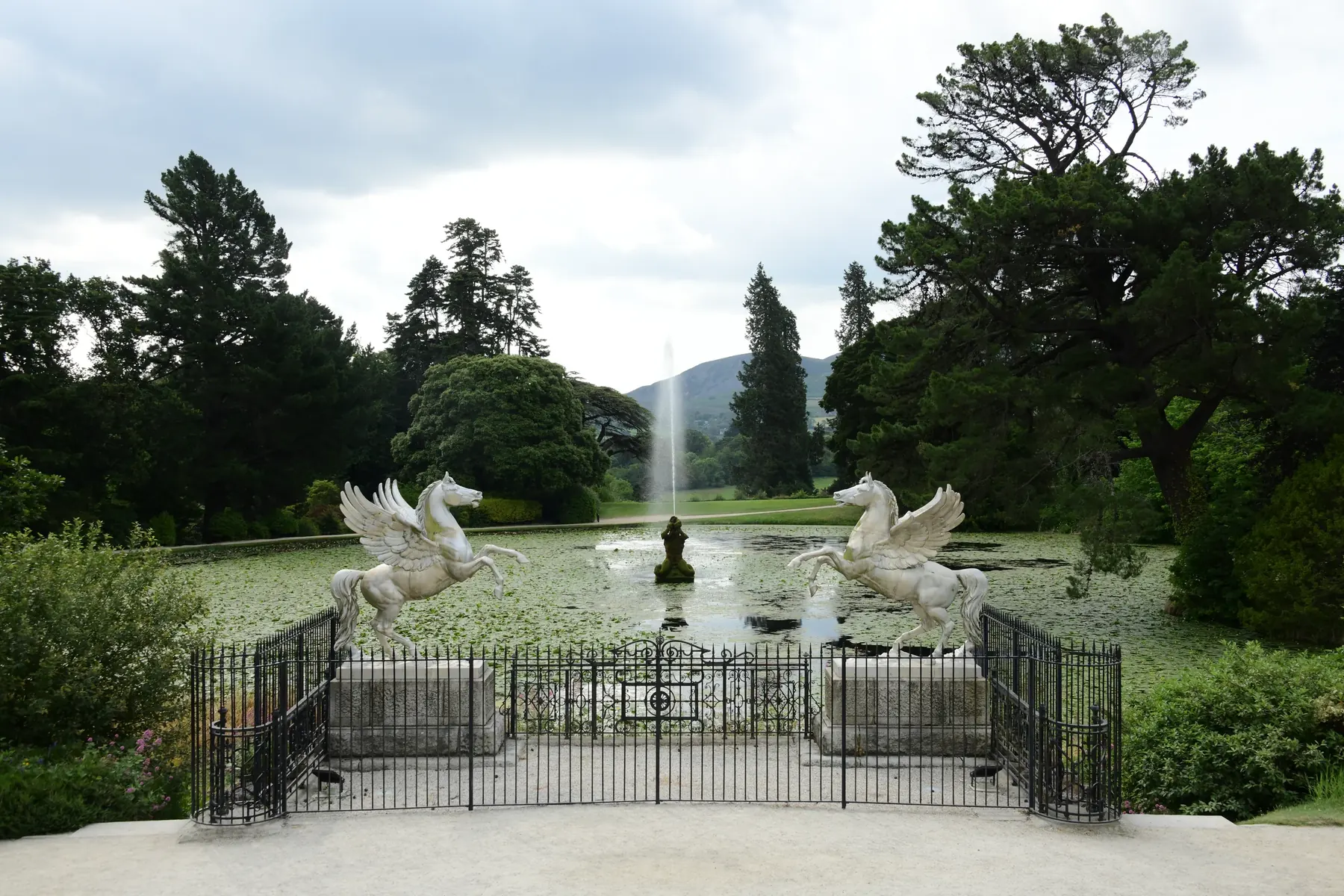
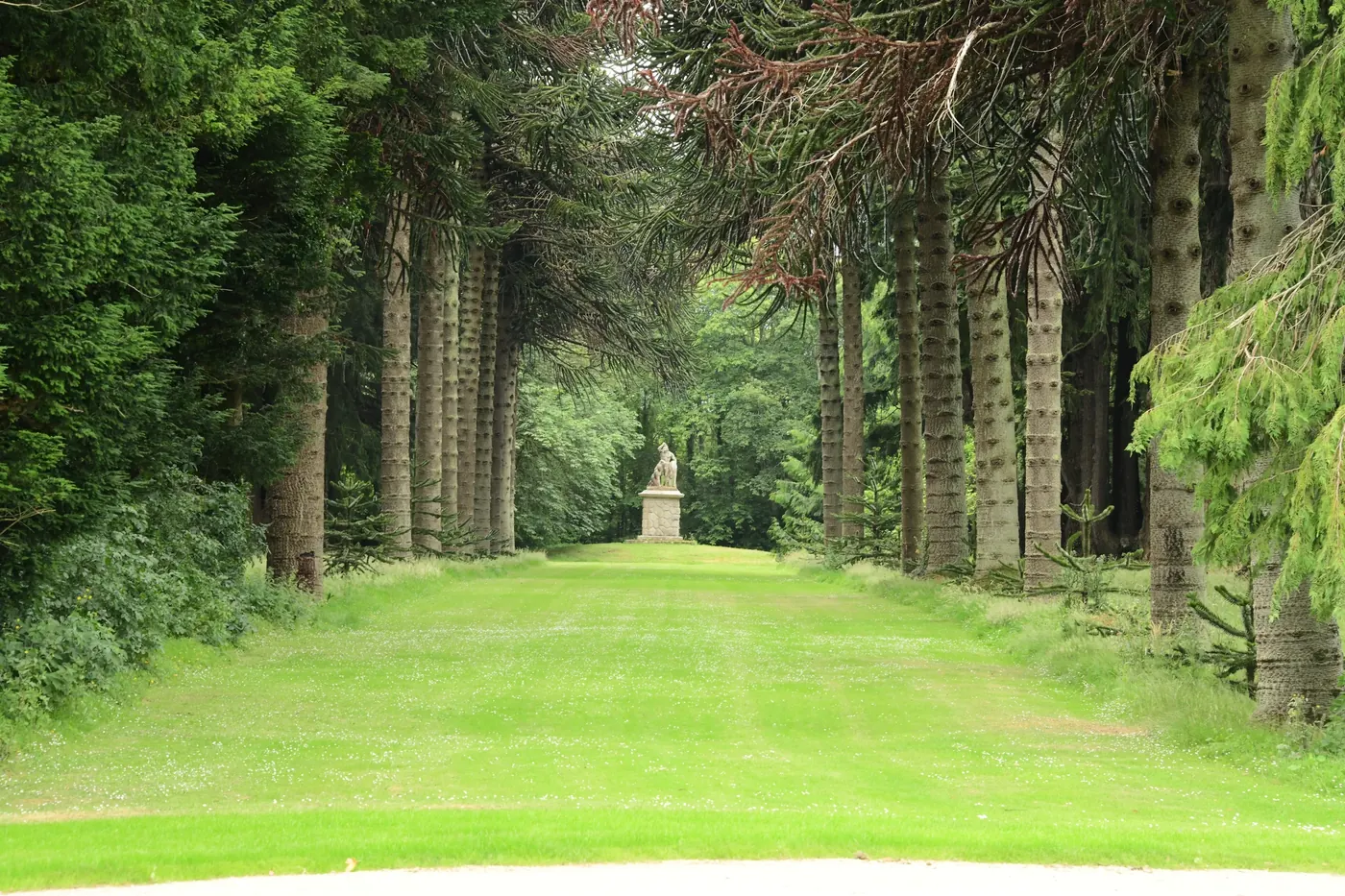
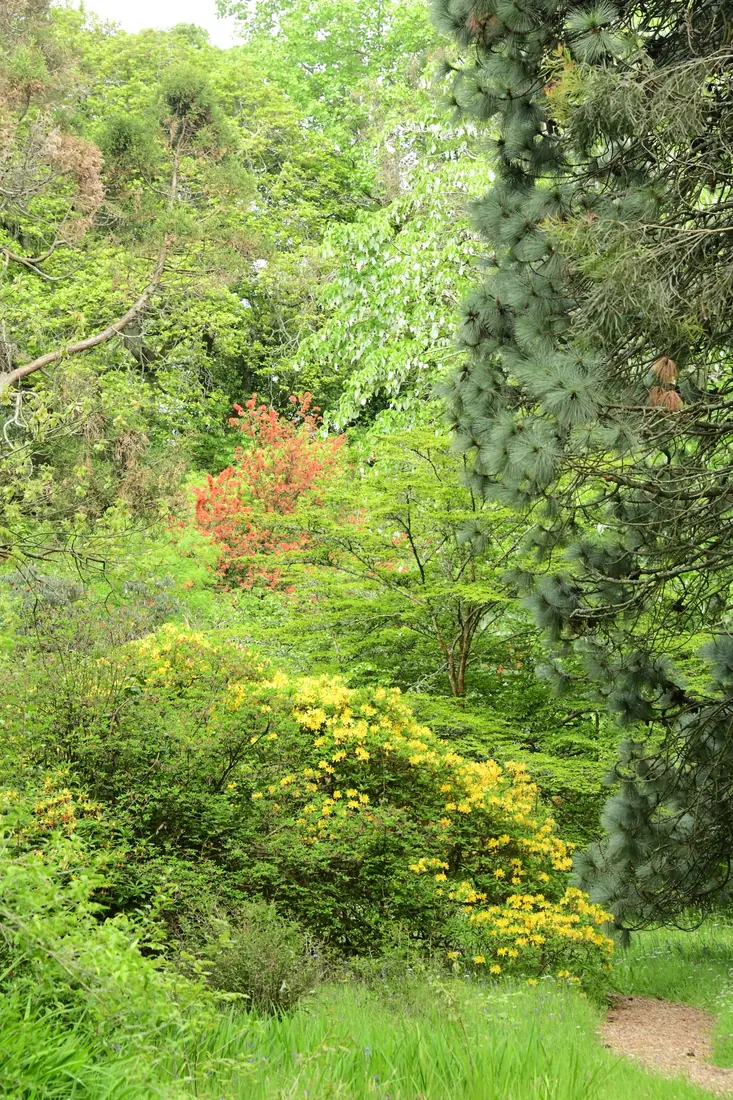
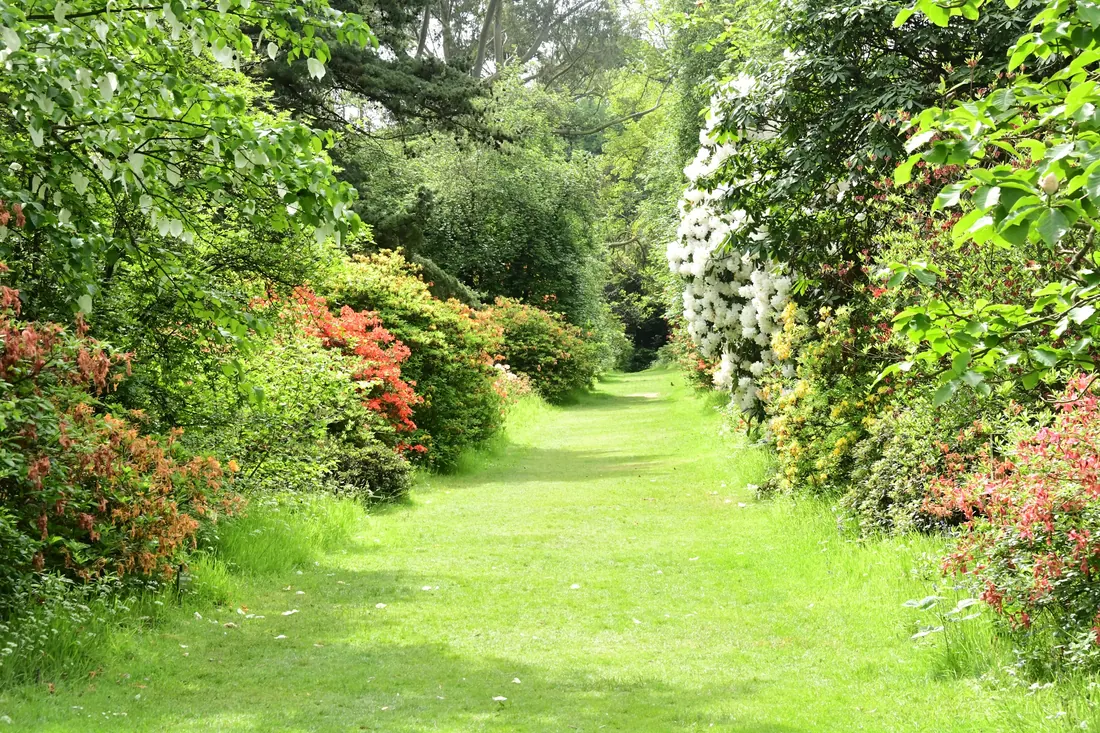
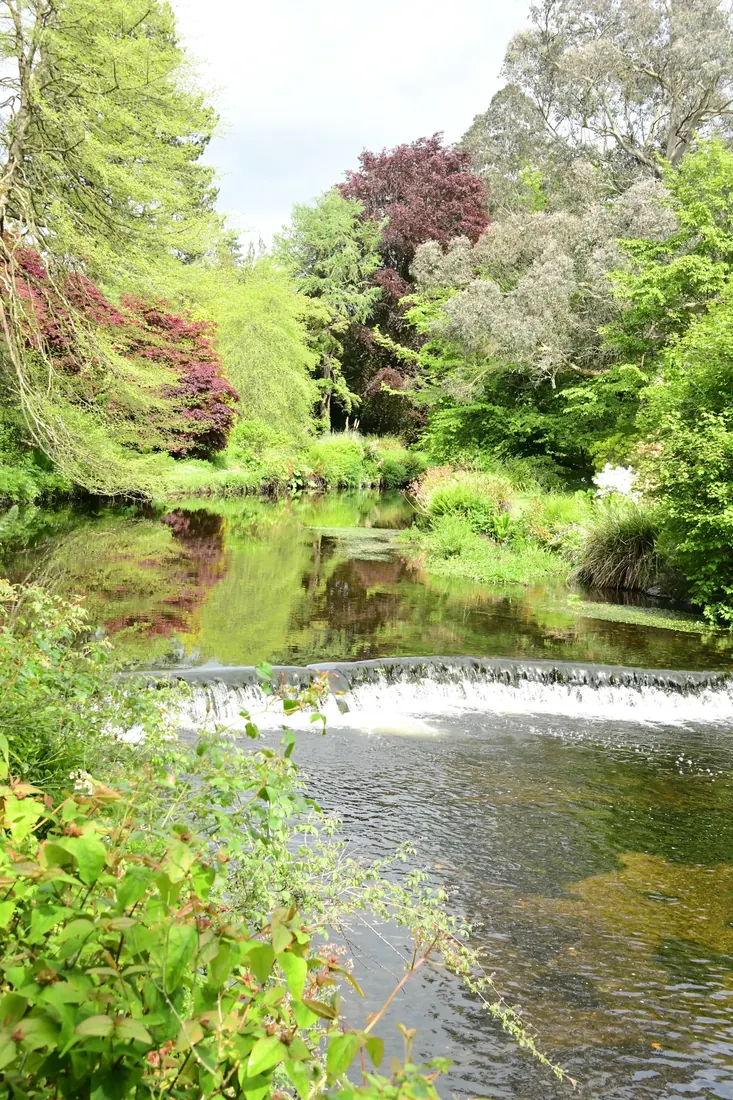
We begin at Russborough, where the Palladian house provides a composed centre to a landscape of mature trees and open parkland. The contrast between the building's ordered proportions and the softer forms of the landscape gives the estate much of its presence. Here, the interest is in the whole setting: the distance between trees, the opening of a view and the way the grounds give the house room to be seen. Lunch is included during our visit, before we turn from the scale of an estate to two gardens created through a much more personal engagement with plants.
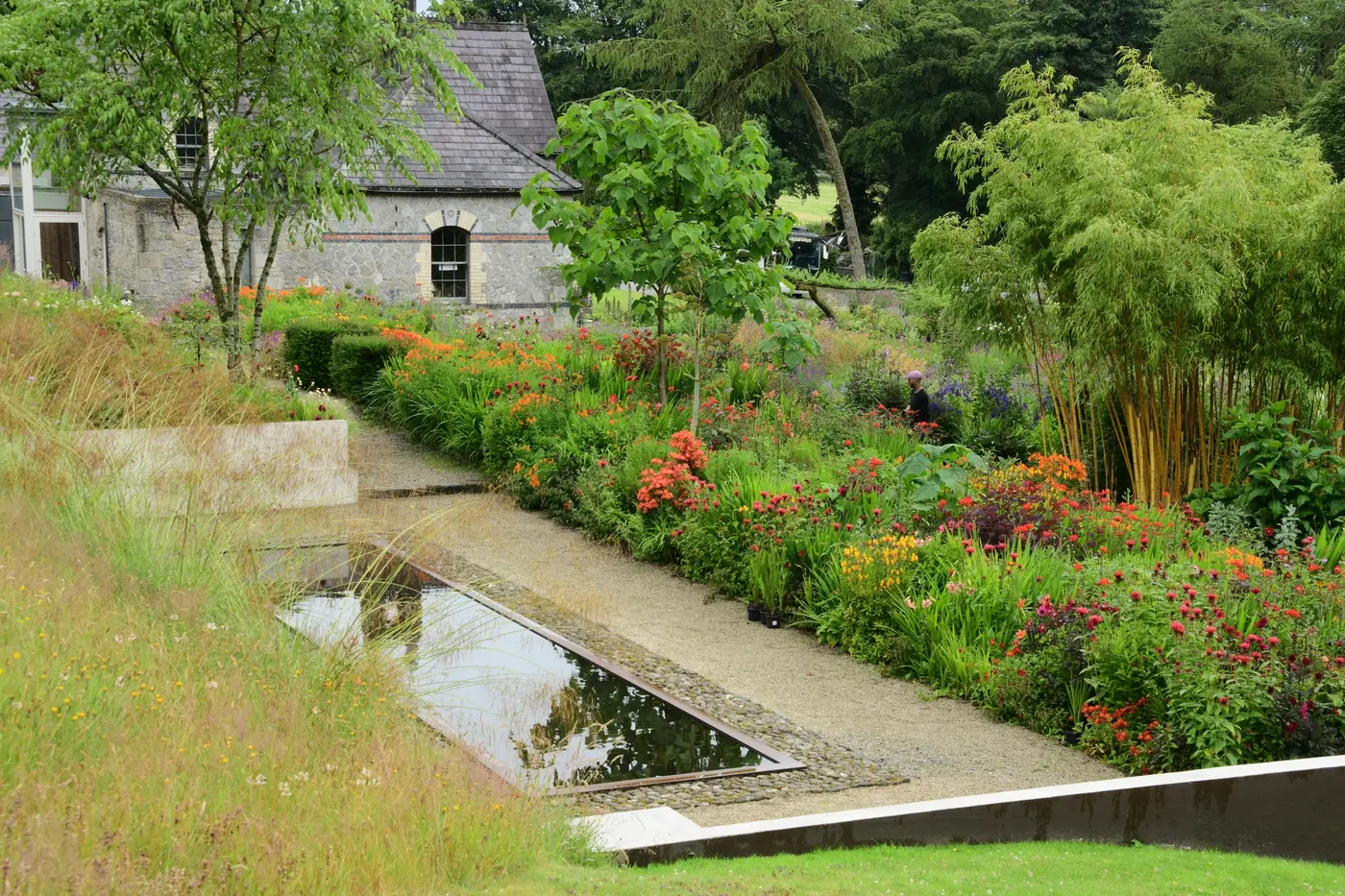
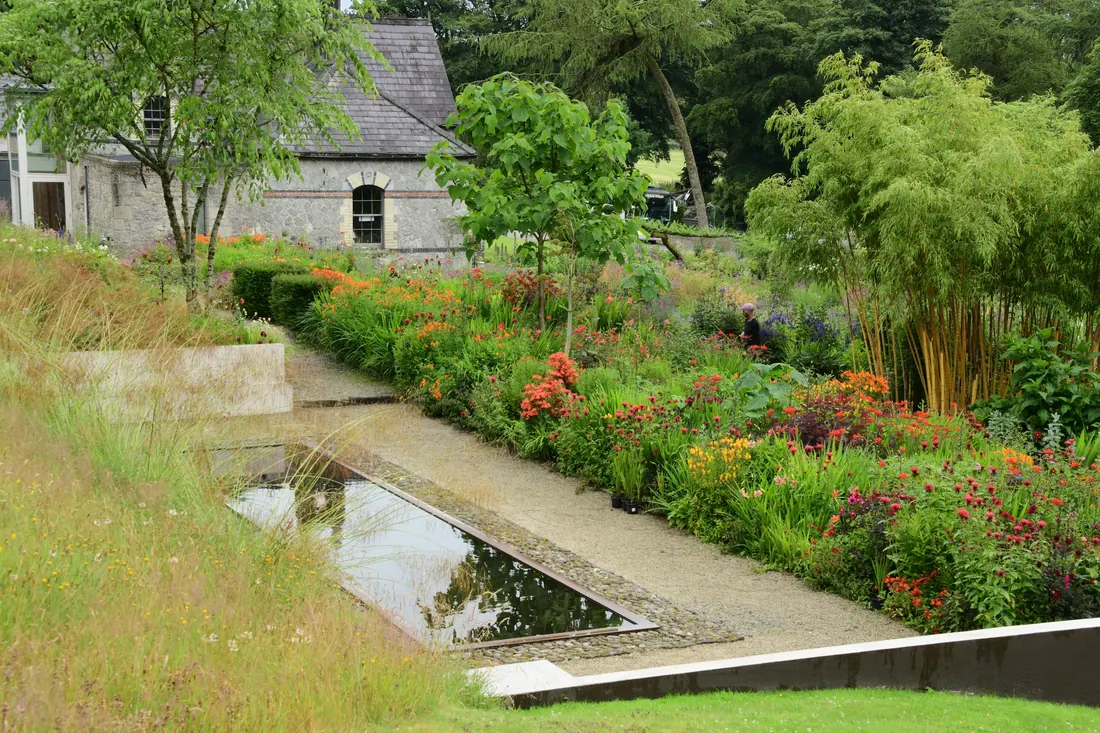
At June Blake's garden at Tinode, discoveries beneath the ground became part of the design above it. A long stone wall inspired a reflecting pool, with Stipa gigantea—a tall, airy grass—planted along its top. Raised rectangular beds and paths use the house as a focal point, while excavated cobbles preserve traces of an older road.
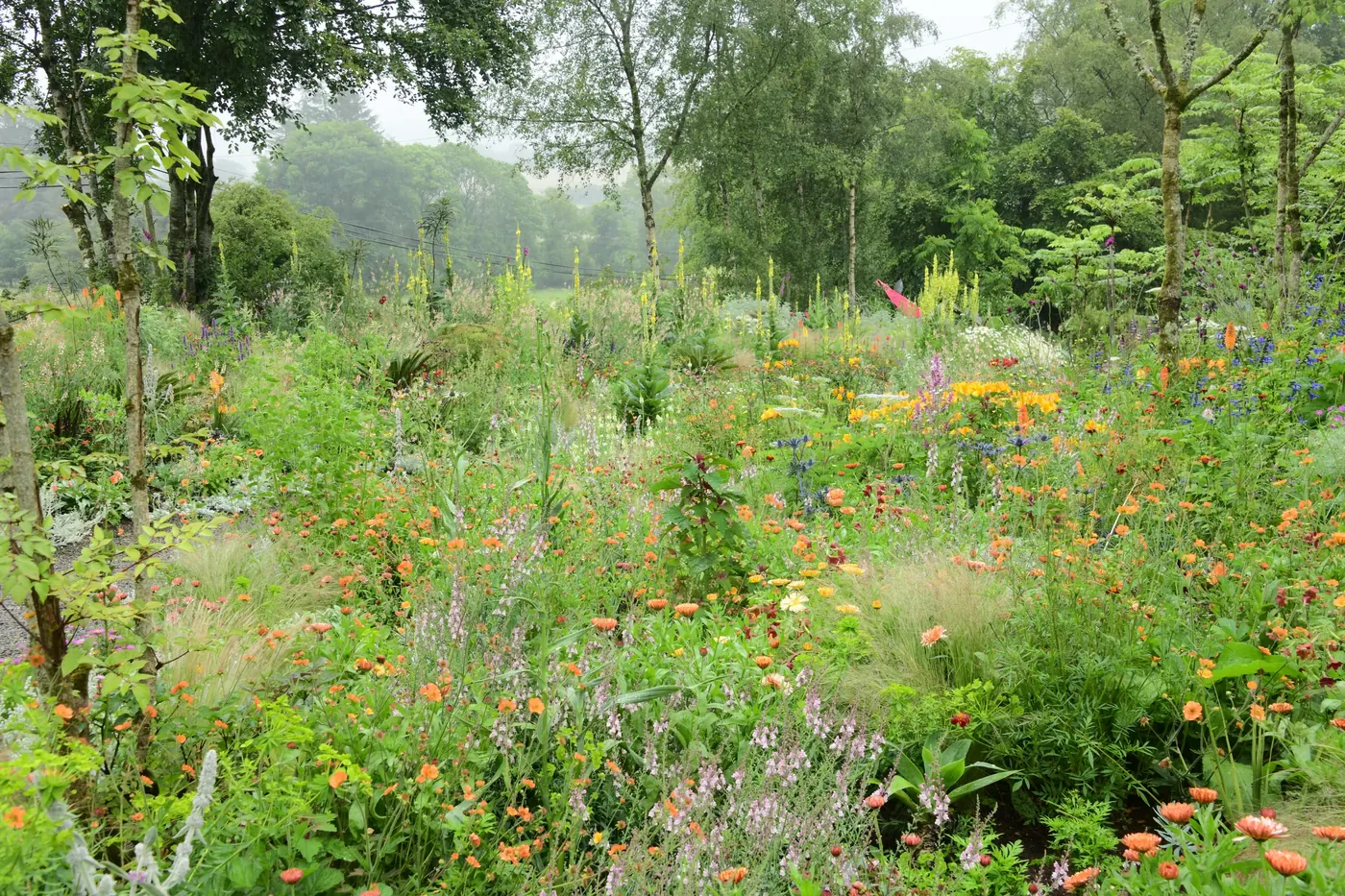
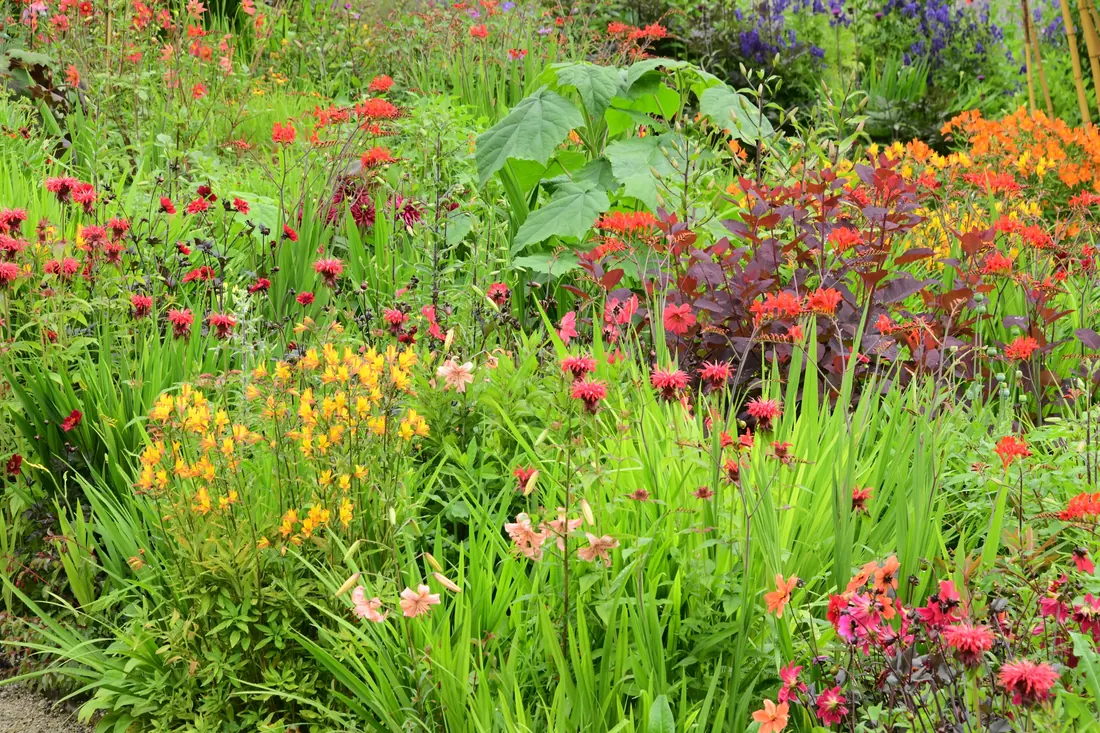
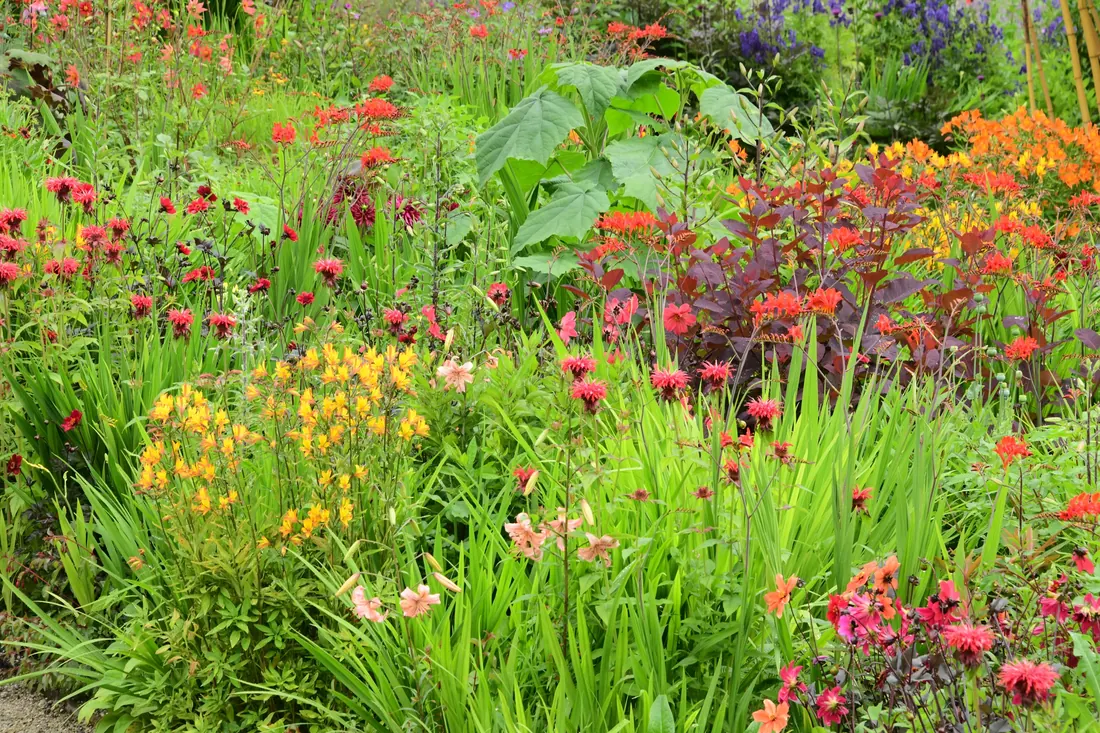
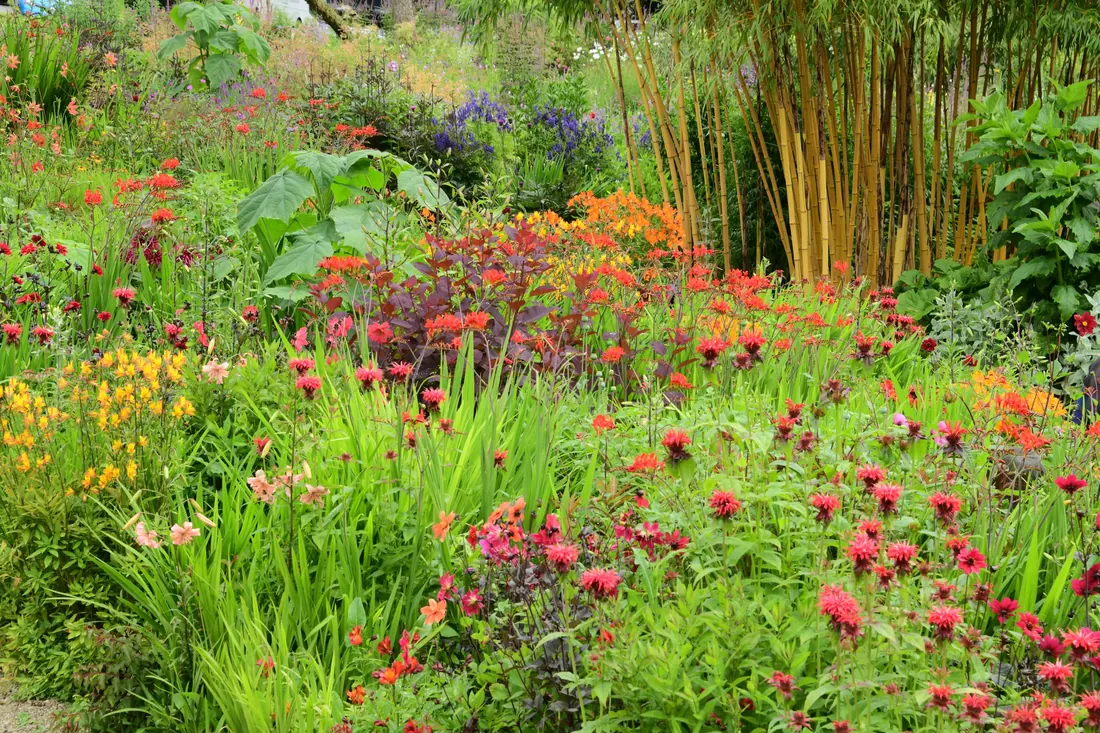
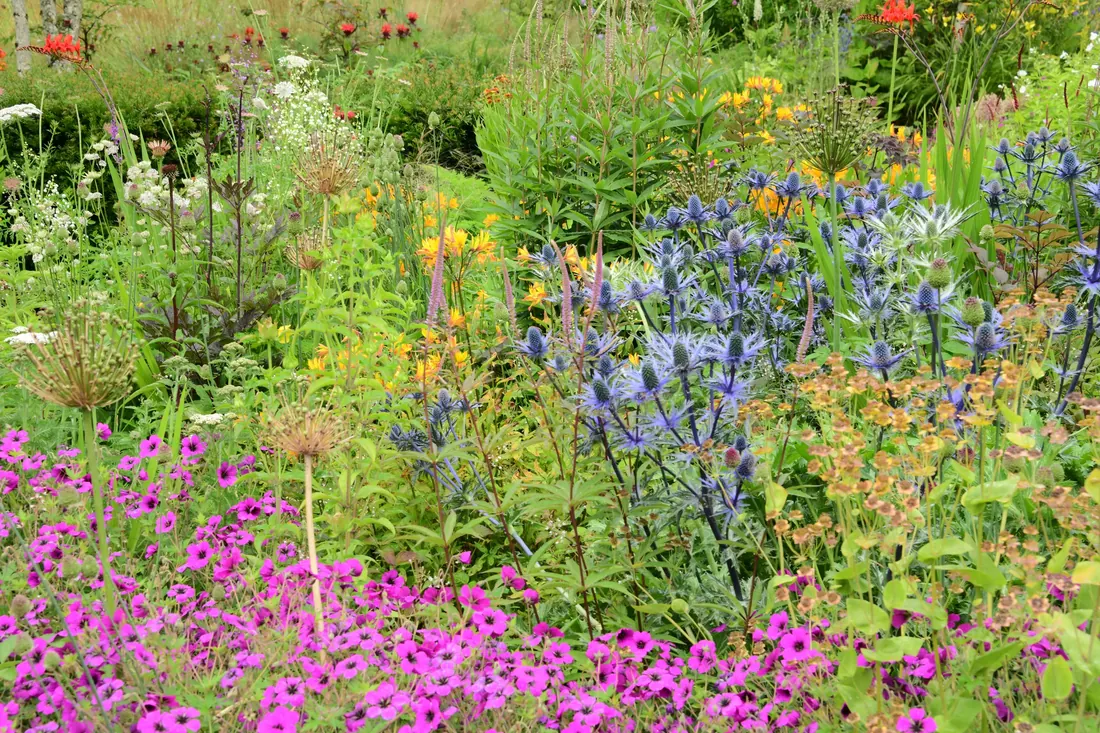
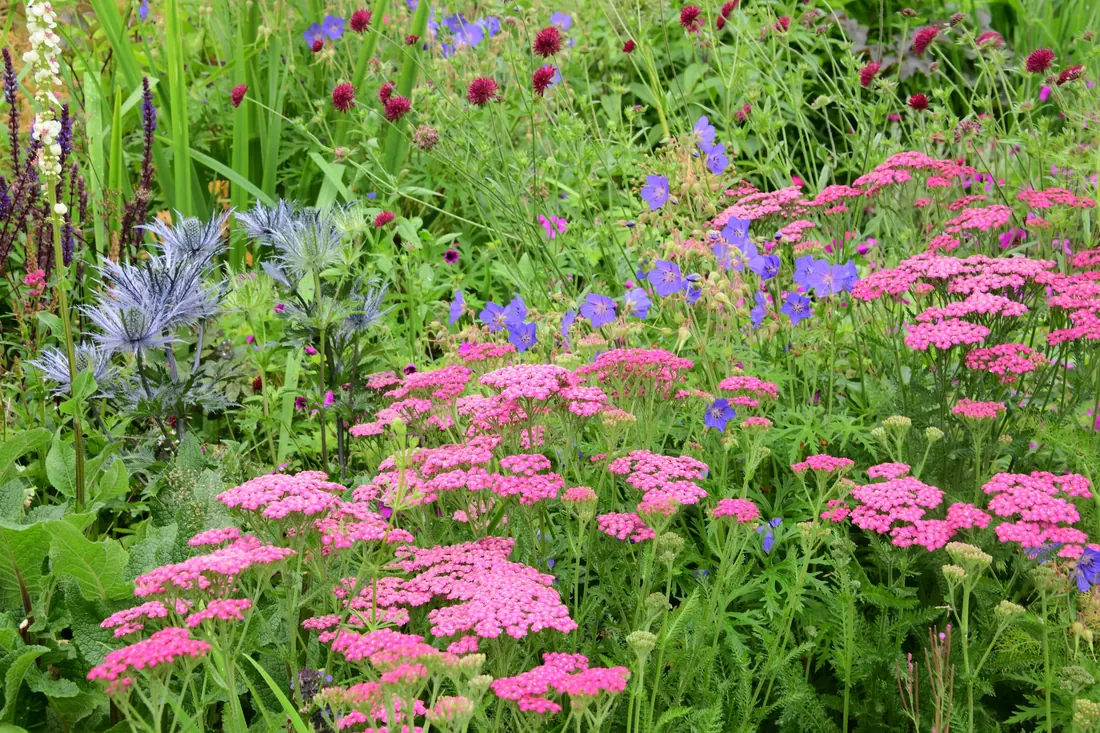
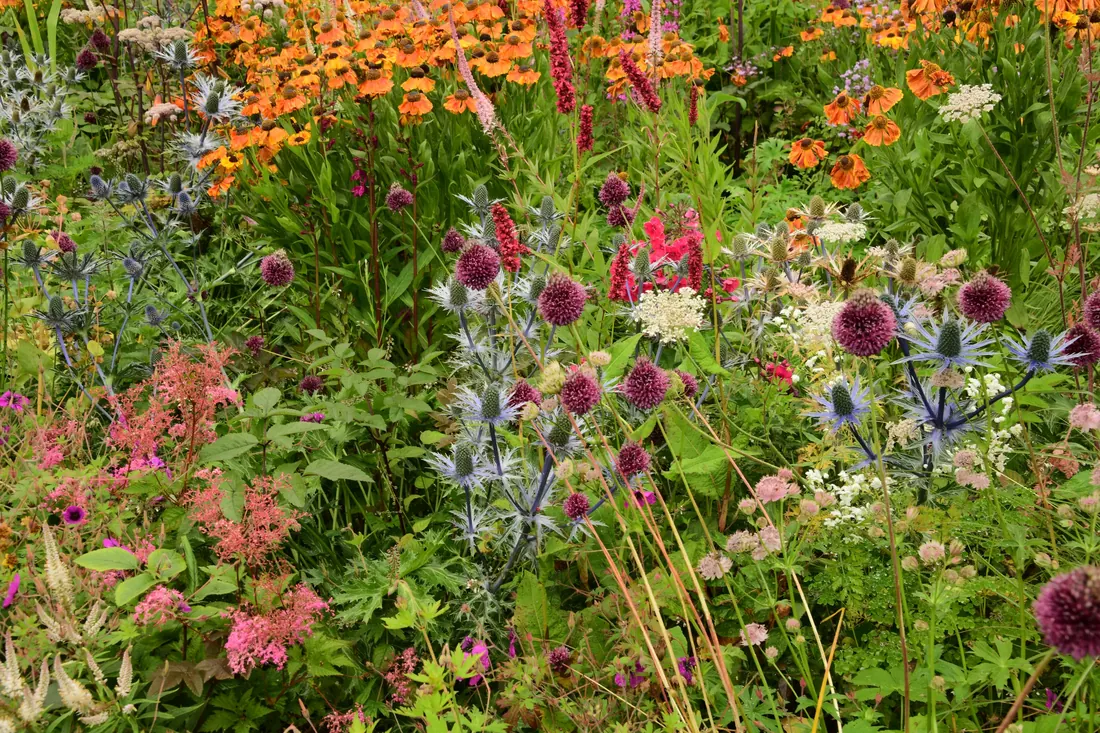
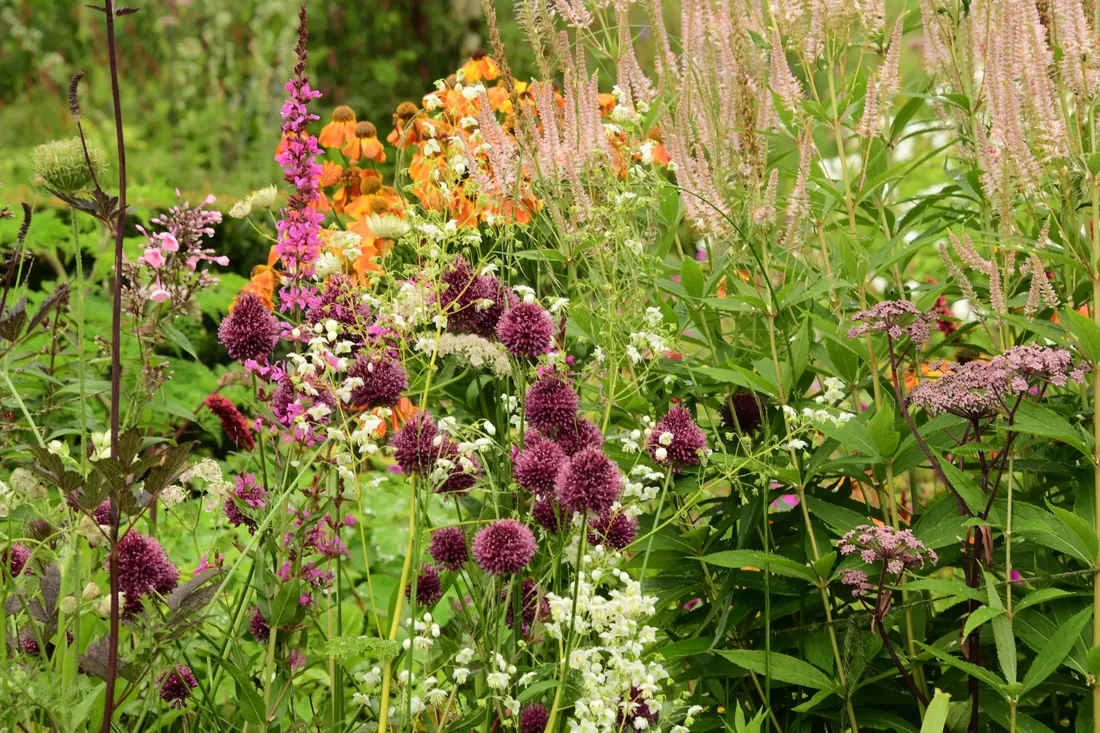
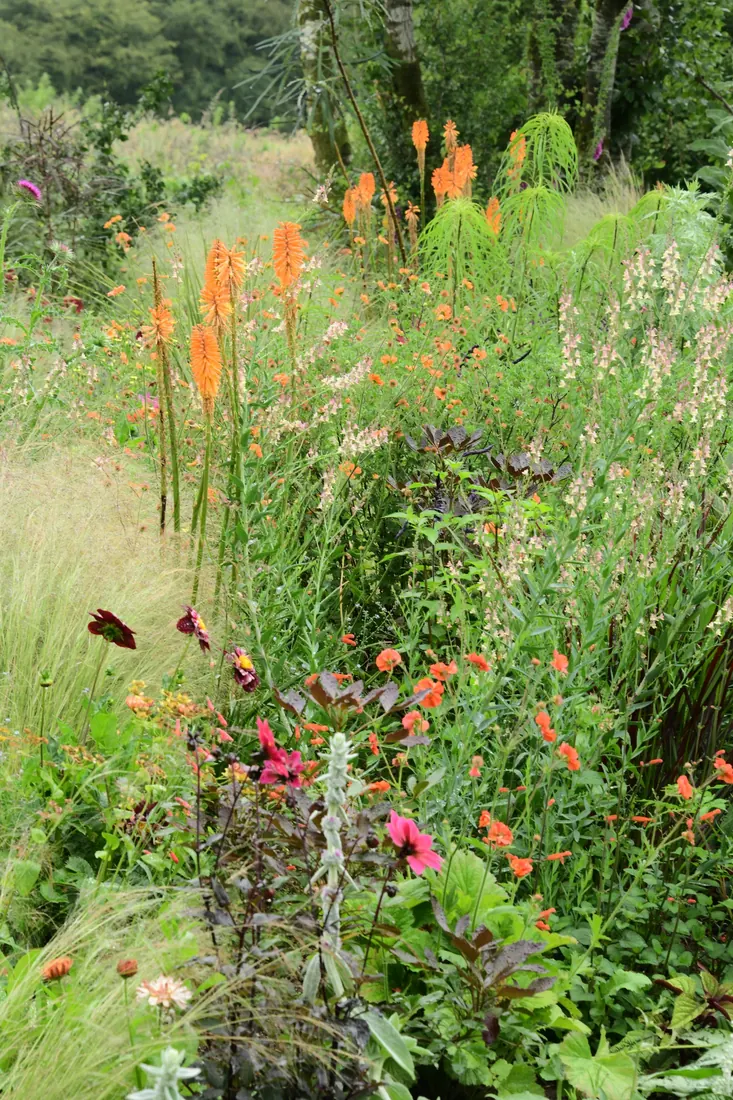
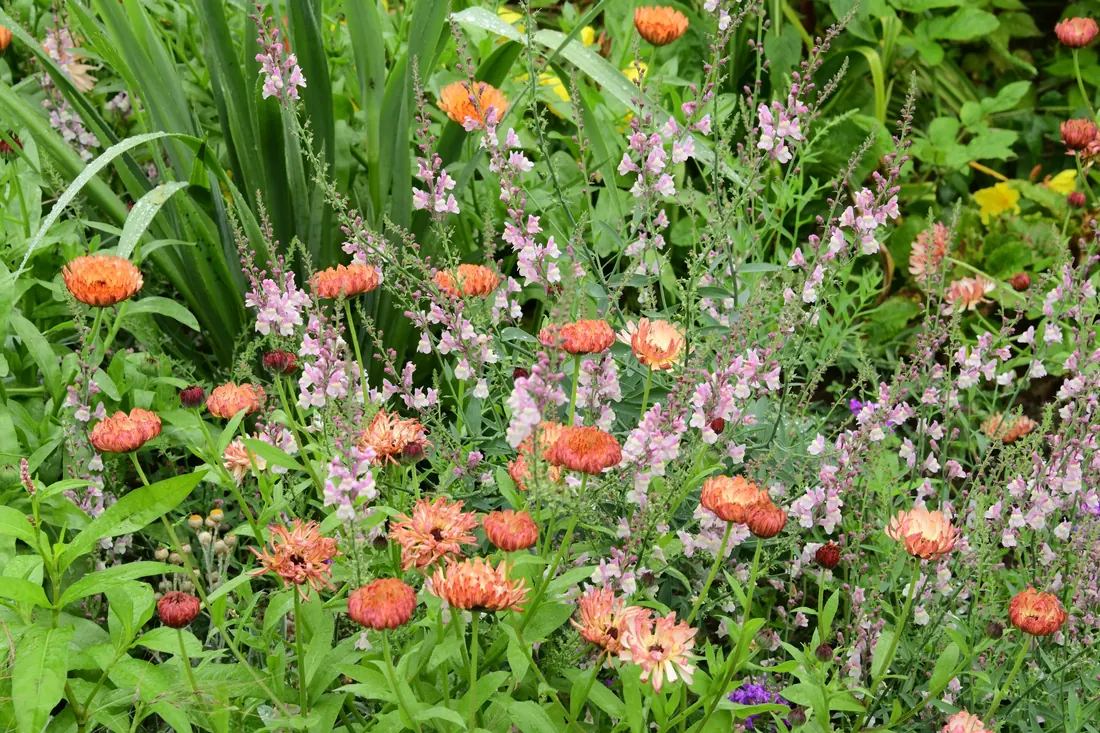
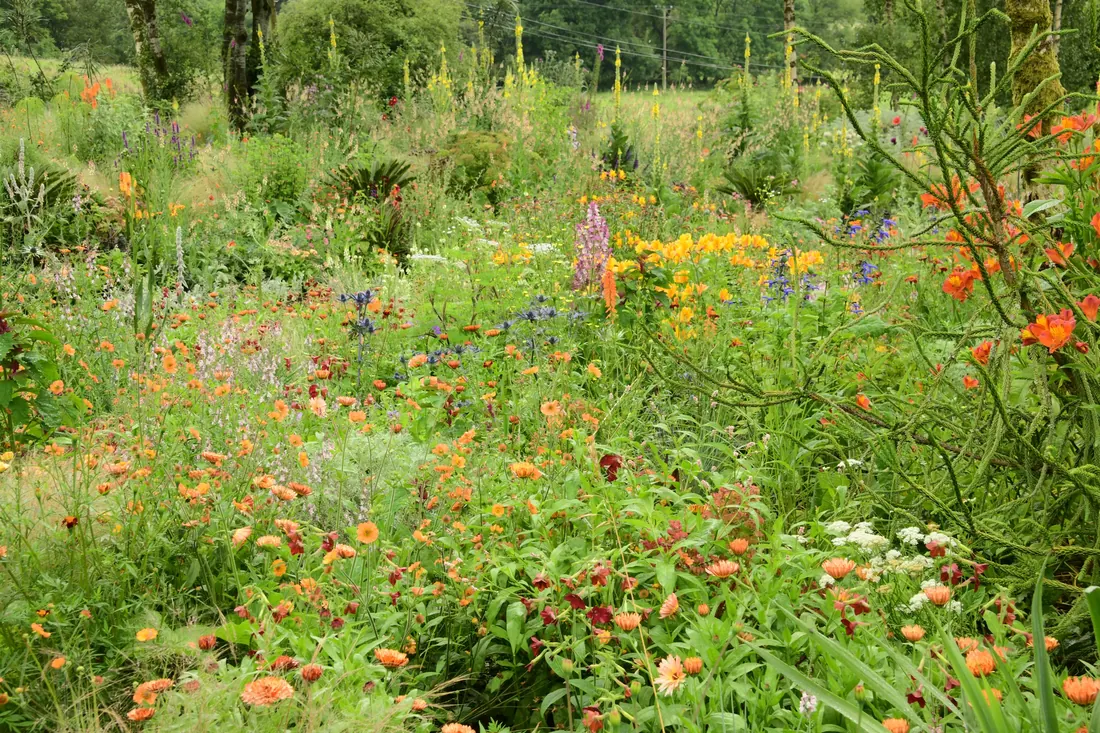
Within this framework, June treats the beds as individual compositions. Cooler combinations of purple, pink and blue contrast with areas of red and orange; grasses introduce movement among the perennials. The interest comes from how the planting changes as you move, and from the balance between the firmness of stone and the freedom of growing plants. It is a garden that invites attention to colour without losing sight of structure.
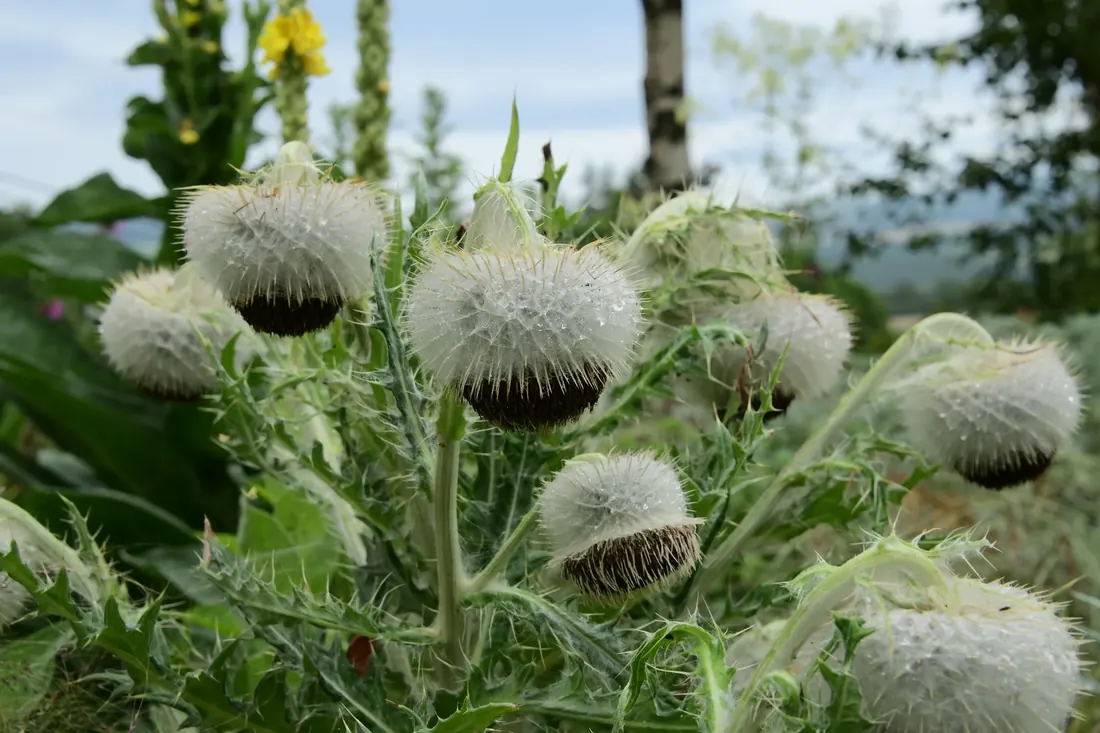
Nearby, Jimi Blake's Hunting Brook brings a collector's curiosity to a landscape of sunny planting, woodland and valley. In its summer beds, substantial leaves are woven together with finer grasses and perennials, creating layers that can feel both luxuriant and surprisingly transparent. The contrast of sharp and soft foliage is as important as flower colour.
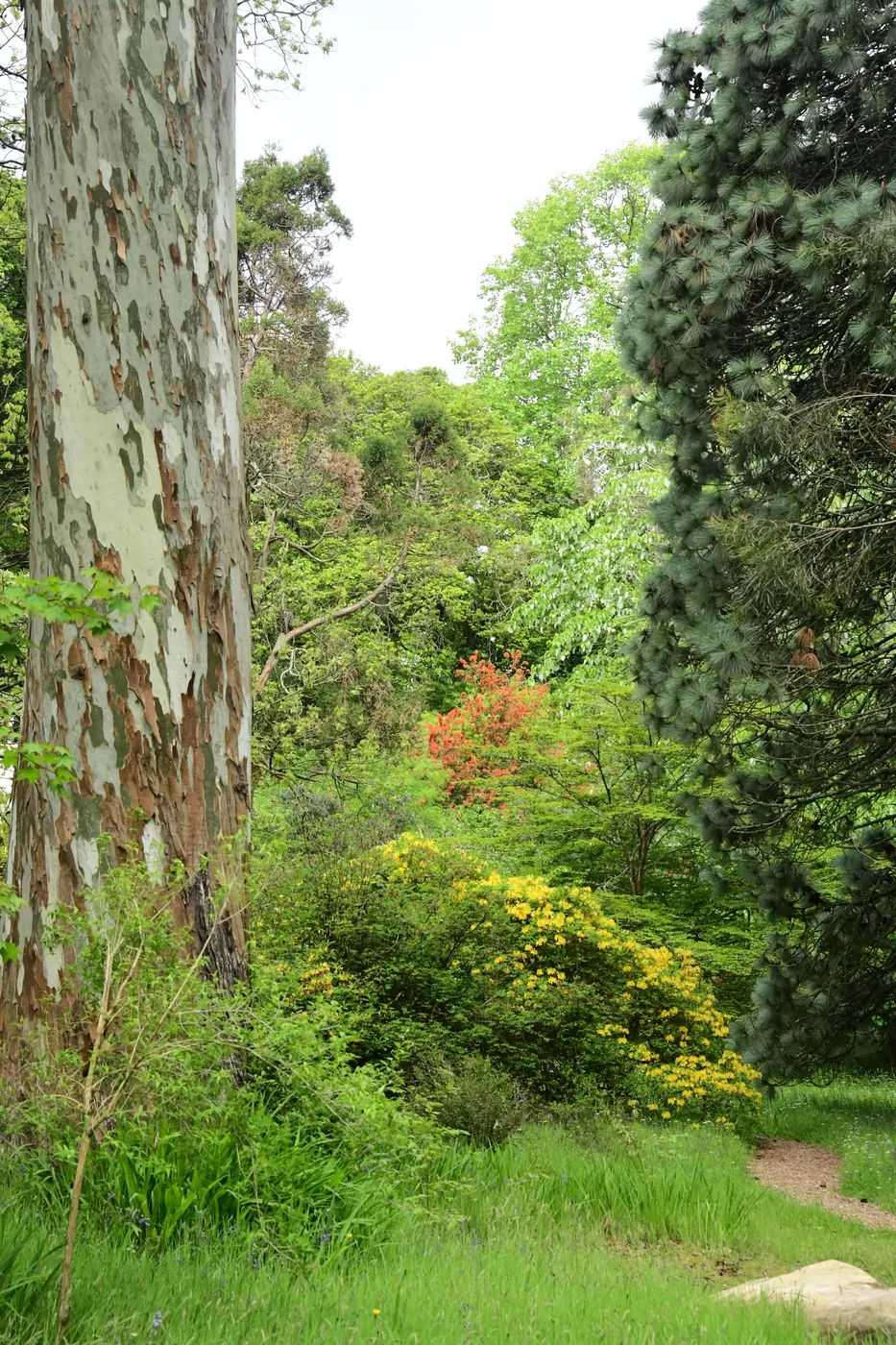
The woodland offers a quieter setting for shade-loving plants, and the transition between it and the brighter beds makes the diversity of the garden especially apparent. Seen after June's garden, Hunting Brook encourages a different kind of comparison: how two gardeners working close to one another can use plants with such individual results. There are ideas here for building a planting scheme through contrasting forms, even where the plants themselves would need adapting to a different climate.