GardenTours.com
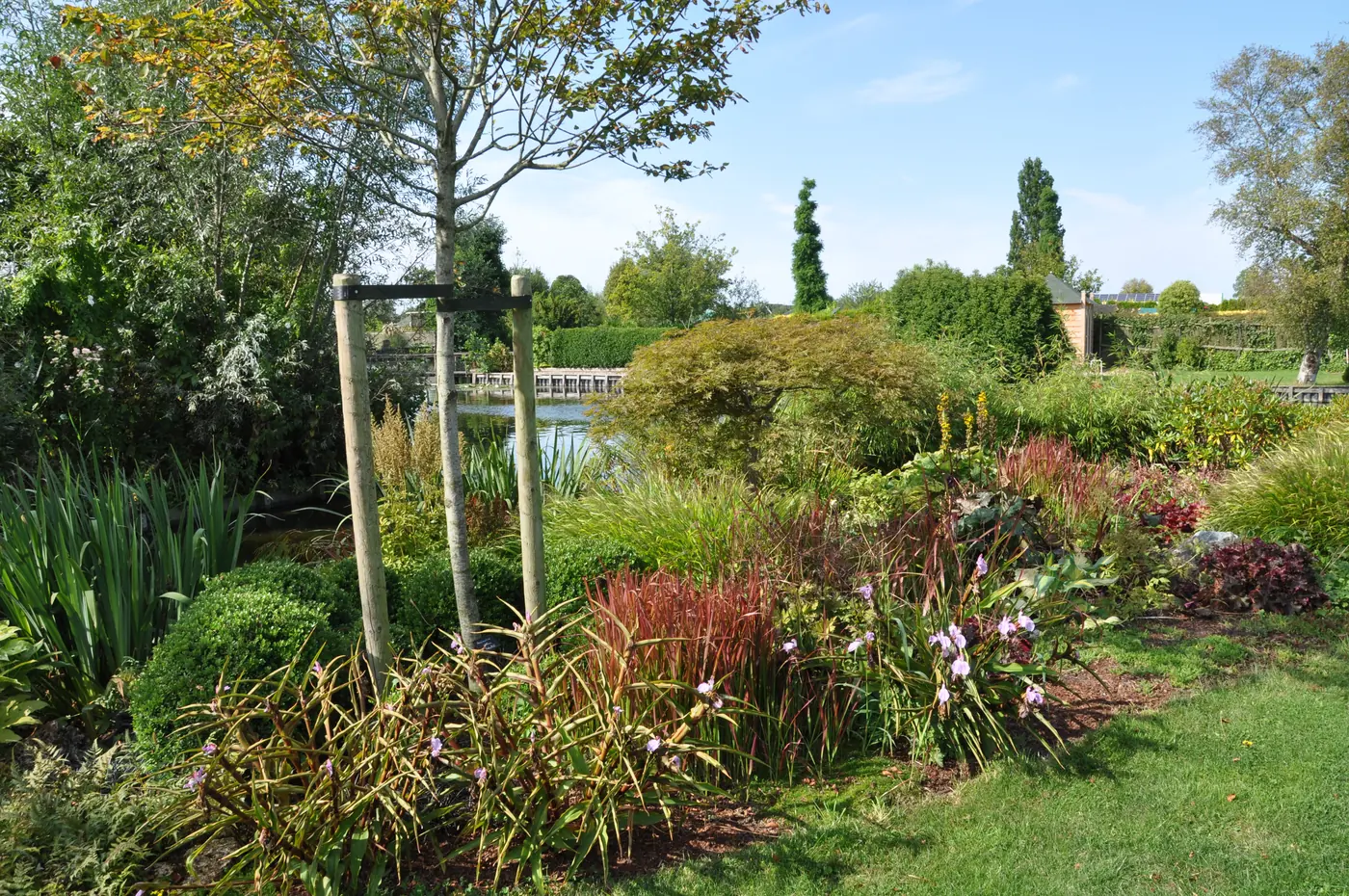
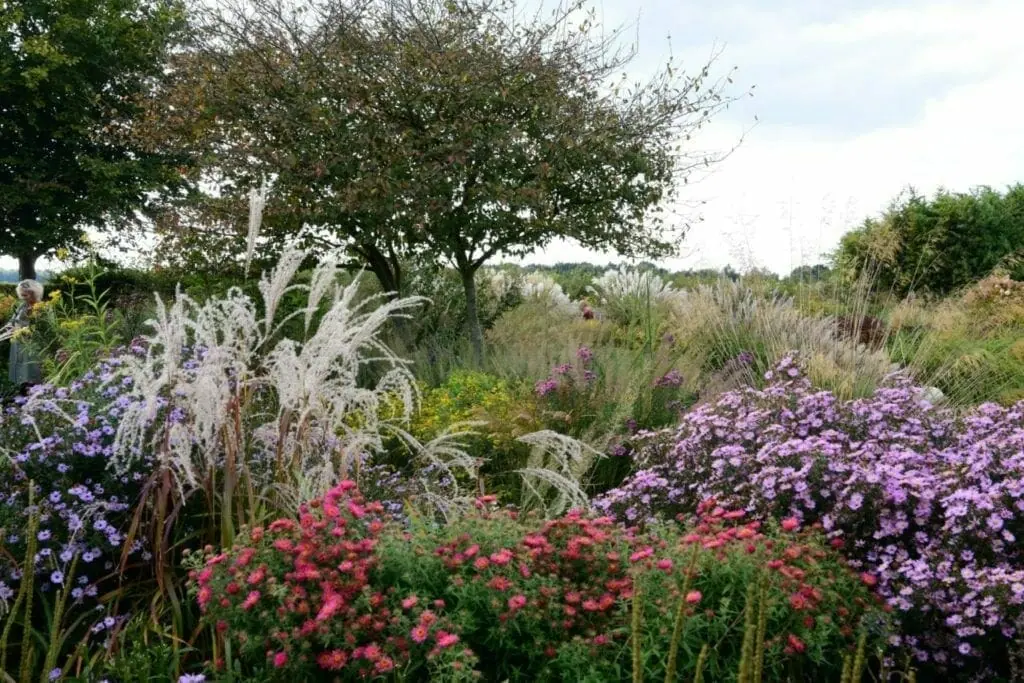
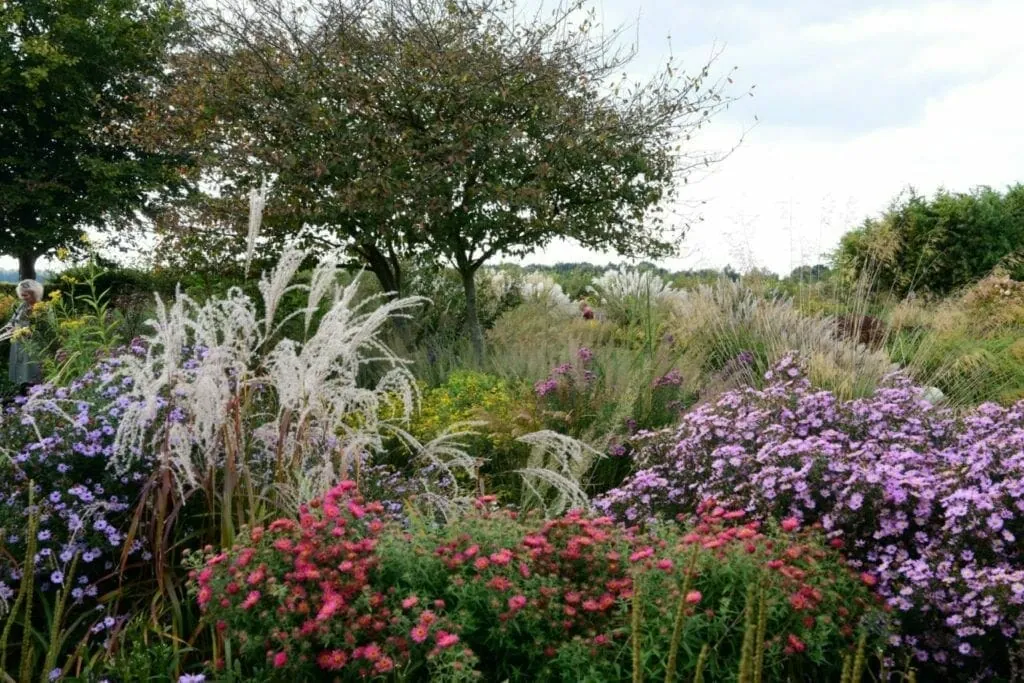
Late-summer perennial planting with asters, miscanthus grasses and developing seedheads beneath a spreading tree
The Netherlands · 3–10 September 2027

Dutch Wave Gardens Tour 2027: Piet Oudolf & Naturalistic Planting

Explore Piet Oudolf's gardens at Singer Laren and Vlinderhof as summer planting moves towards autumn. Mien Ruys's experimental gardens, private perennial gardens and specialist nurseries complete an eight-day journey through Dutch garden-making, with time for Amsterdam and the Rijksmuseum.

Tour Price
US$5,445 per person

Deposit: US$1,000

Duration
8 days / 7 nights
Hotels
DoubleTree by Hilton Amsterdam Centraal Station, DoubleTree by Hilton Rotterdam Centre & Hilton Amsterdam Airport Schiphol
Transport
Coach transport
Group size
15–20 guests
Activity level
Moderate
Tour overview

Piet Oudolf and the gardens behind the Dutch Wave

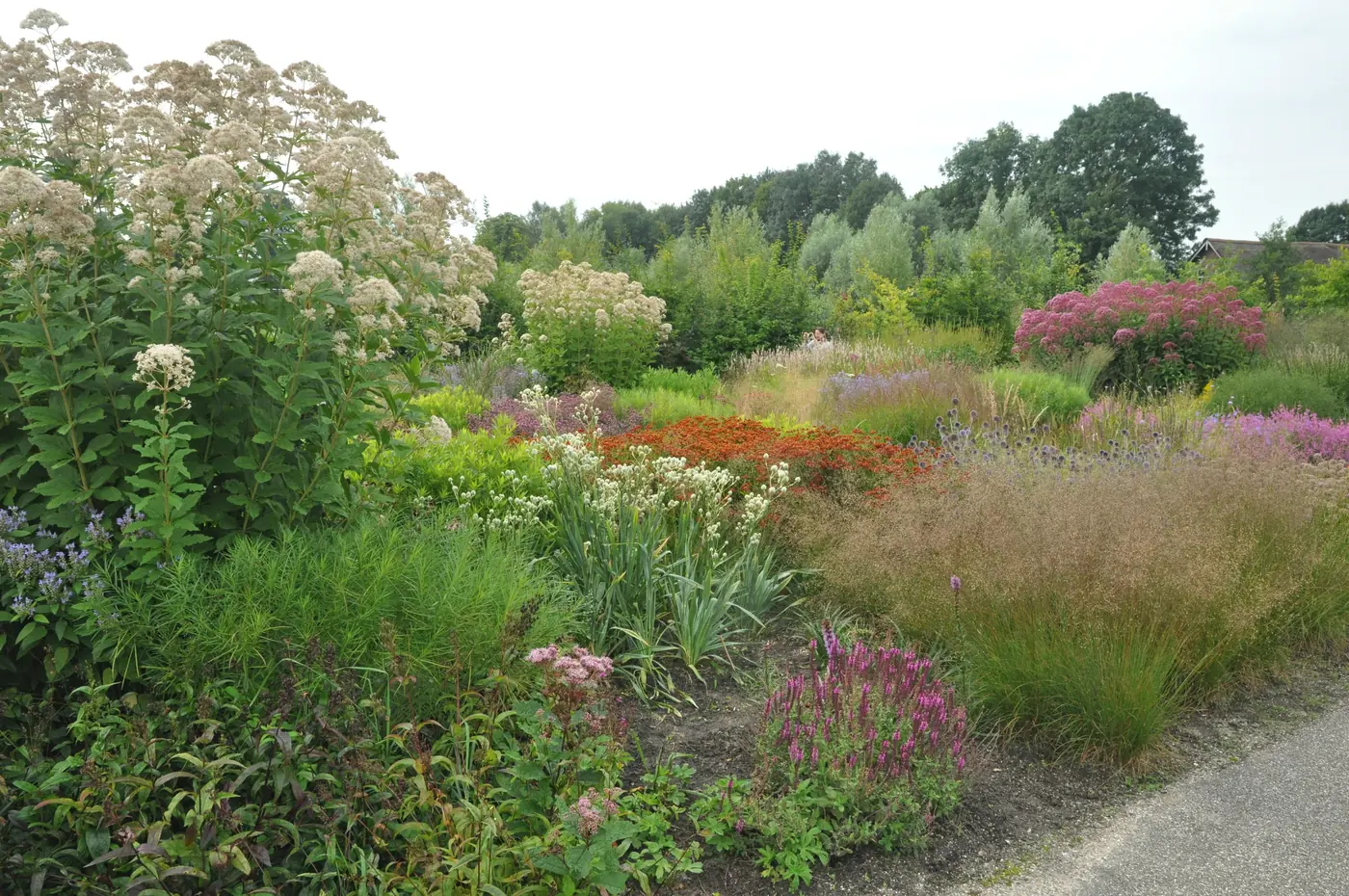
At Vlinderhof, grasses soften the outlines of upright perennials, flowers mingle with developing seedheads, and repeated groups carry the eye across the planting. A turn along a grass path brings a different combination into view. At Singer Laren, Piet Oudolf’s planting surrounds sculpture and connects the museum, villa and theatre. We visit both gardens on the same day, experiencing his work in two different settings at a rewarding point in the season.

Oudolf’s gardens have helped change the way people appreciate plants. Flower colour is part of their appeal, alongside the shape of a stem, the texture of foliage and the forms that remain after flowering. His work on the High Line in New York and at Chicago’s Lurie Garden has brought these ideas to an international audience. This tour explores them in the Netherlands, together with the gardens and plantspeople that give the Dutch Wave its wider context.

In Dedemsvaart, Mien Ruys’s garden experiments reach back to 1924 and reveal decades of work with planting, materials and space. Fortmond sets tall perennials and grasses around a modern house; Polhuis brings colour and unusual combinations to a farmhouse garden. Jelle Grintjes and Hans Gieszen and Yuxian Sun offer different interpretations of naturalistic planting, while Tom de Witte’s garden adds another contemporary designer’s perspective.

Growing plants is part of the story too. Het Turfhof developed from a perennial business and trial garden. Waterside Garden brings nursery plants into contrasting garden spaces beside Boskoop’s waterways, and In Goede Aarde shows its border plants and grasses in mature combinations. These visits connect the pleasure of a garden with the knowledge behind its planting.

Early September allows us to see flowers, grasses and the first signs of autumn together. Each garden responds differently to the season, giving the journey interest beyond a single display. There are ideas for experienced gardeners and designers, and plenty to enjoy for anyone drawn to plants, art and landscape.

Four nights in Amsterdam combine garden excursions with a free morning in the city, a guided Rijksmuseum visit and a canal cruise. We then spend two nights in Rotterdam before our final garden day, a farewell dinner in Amsterdam and a last night at Schiphol. Shared meals provide time to get to know one another and exchange discoveries along the way.

Day-by-day itinerary

A day-by-day guide to the gardens visited, hotels and the shape of the journey.

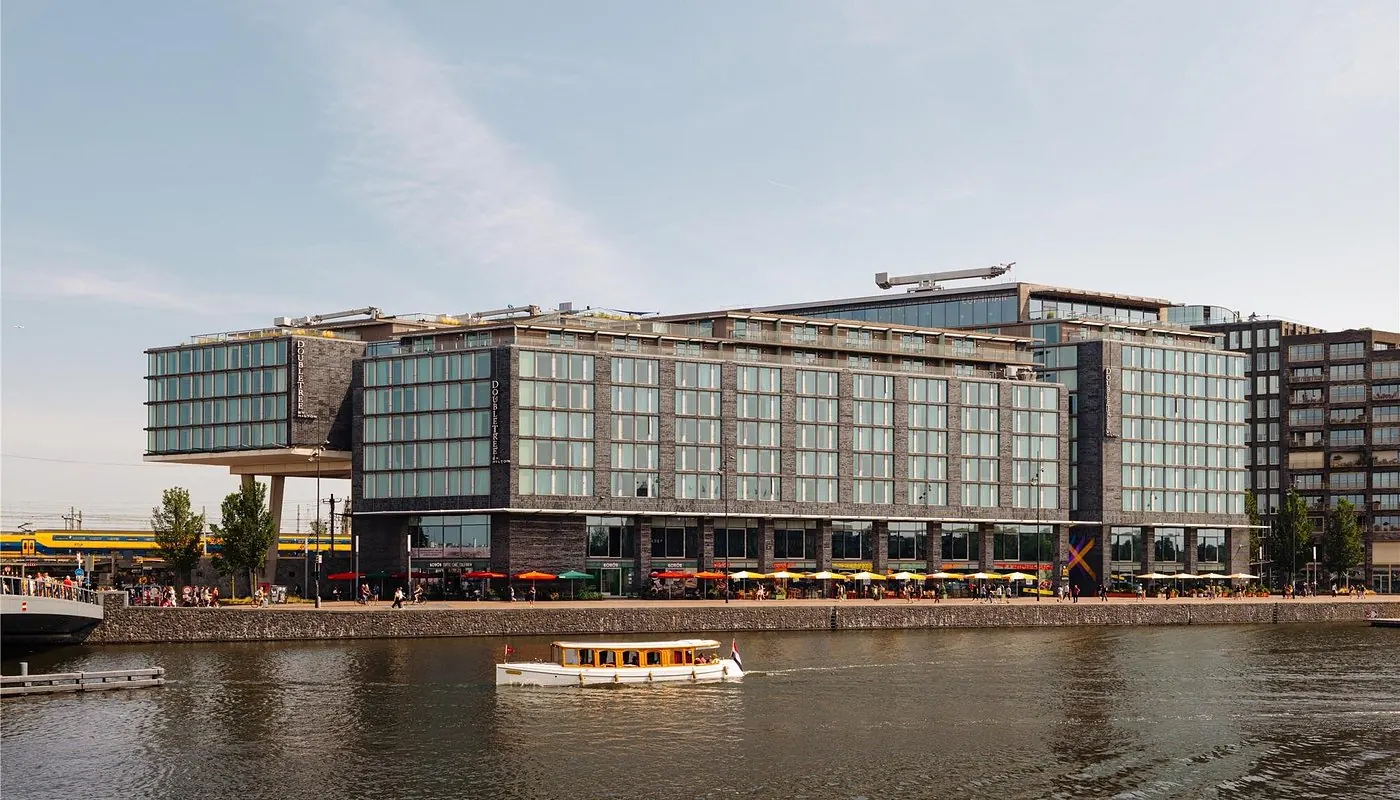
The DoubleTree by Hilton Amsterdam Centraal Station on the waterfront beside the station, with a canal boat in front
Day 1 · Friday 3 September 2027

Arrival in Amsterdam

Arrive in Amsterdam and settle into DoubleTree by Hilton Amsterdam Centraal Station, our base for the first four nights. Today gives you time to rest after your journey before the garden programme begins tomorrow. We will return to the same hotel after our first excursions, with a day in Amsterdam before moving on to Rotterdam.

Join your fellow travellers for a welcome dinner at the hotel. Some will arrive with favourite plants and particular questions about Oudolf’s work; others will be looking forward to the gardens, art and places we encounter. Those different interests bring plenty to the conversation as we get acquainted.

The week takes us into the Dutch late-summer garden, where grasses and perennials have developed the height and presence that photographs of spring cannot convey. We will see gardens created for different purposes and on different scales, from private planting around a home to Oudolf’s public garden at Vlinderhof. Each adds something to our understanding of the movement and its continuing influence.

Perennial planting beside the water at Waterside Garden, Boskoop
Day 2 · Saturday 4 September 2027

Het Turfhof, Waterside Garden and Boskoop’s waterways

Our first garden day begins at Het Turfhof in Lisserbroek. A perennial-growing business and a trial garden behind the barn lie behind the garden we see today. Its planting changes through the year, with summer flowers giving way to warmer colours and flowering grasses as autumn approaches.

Spent stems are left standing through winter, providing food and shelter for small insects before the perennials are cut back late in winter. During our September visit, flowers and developing seedheads may be present together. The changing forms give the planting continuity: a flower’s colour can fade while its outline remains part of the border.

The connection with growing is an engaging place to begin the tour. Plants can be appreciated as individual specimens and as part of a larger group, with their neighbours bringing different qualities to the fore. Grasses introduce movement among more substantial stems and leaves, while the changing season draws attention to the plants that hold their shape.

At Waterside Garden in Boskoop, we enter a peninsula beside the De Lansing nature area. Olga and Arno Rijnbeek created the garden in 2022 as an experimental display for a perennial nursery. The garden moves between shaded planting, prairie-style borders and other garden settings, each with its own combinations.

The prairie-style area includes baptisias, crocosmias, asters and salvias among grasses, using plants familiar from Oudolf’s work with the owners’ own interpretation. Woodland plants bring a quieter atmosphere elsewhere, while different border styles broaden the palette. The variety makes this a garden of changing spaces, held together by its waterside setting.

Our programme includes a boat trip and lunch. From the water, Boskoop’s landscape unfolds at a gentler pace, providing a pause between the garden visits and our return to Amsterdam. Over lunch there is time to exchange the first discoveries of the week, from an unfamiliar plant to a combination worth remembering. Dinner is included at the hotel this evening.

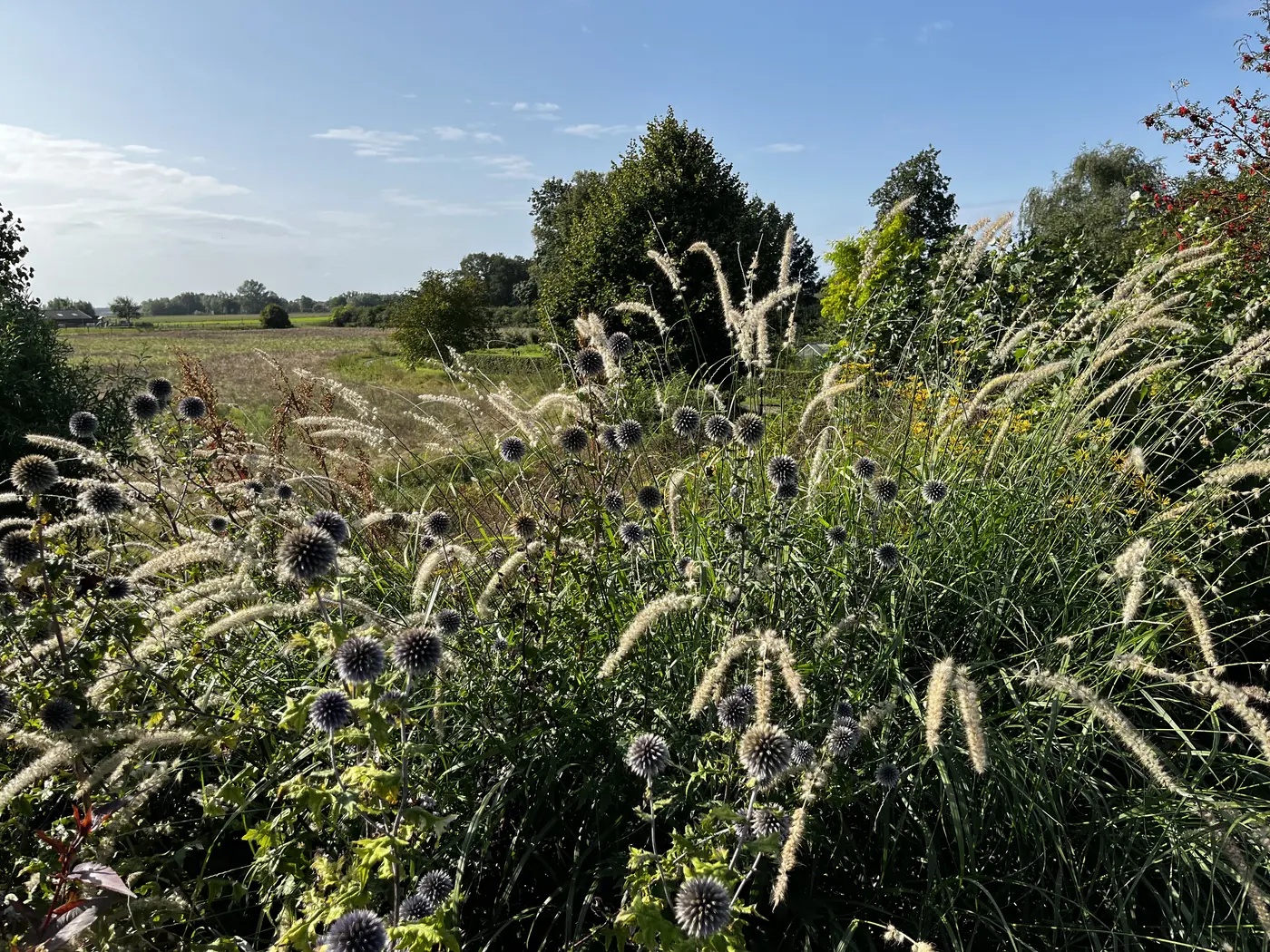
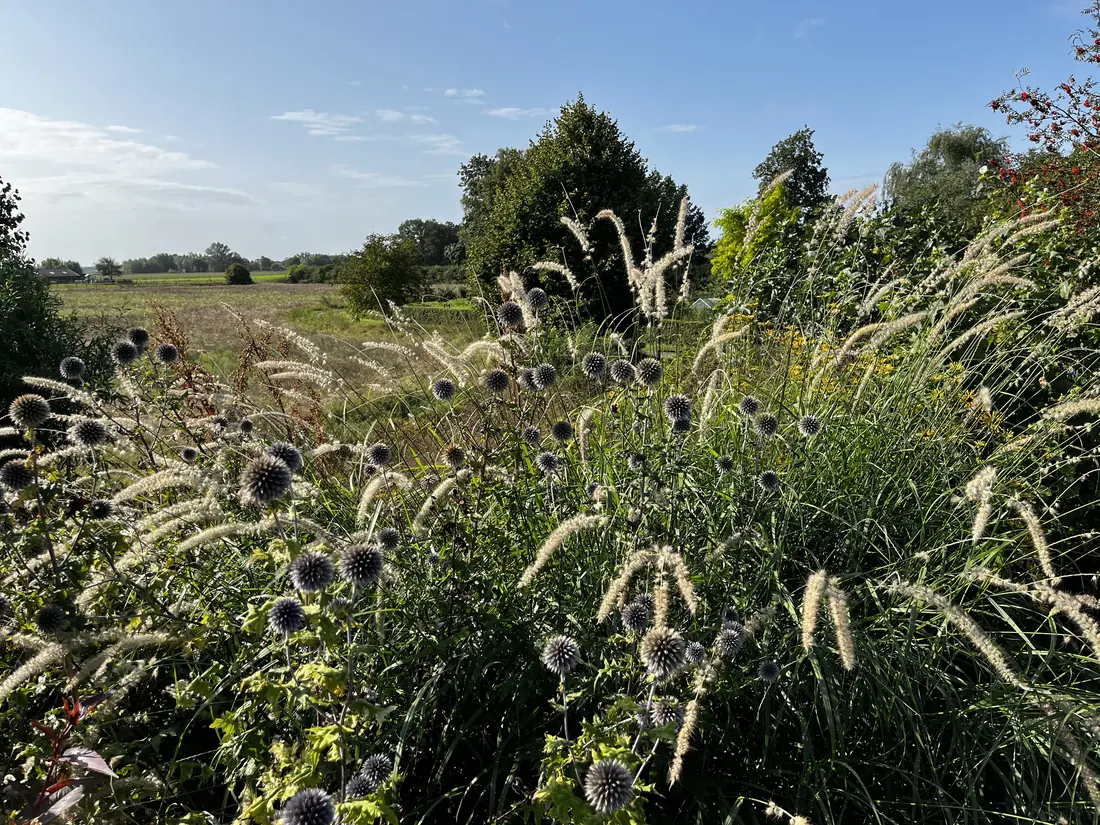
Ornamental grasses and eryngium against open farmland at De Tuin van Fortmond
Day 3 · Sunday 5 September 2027

Fortmond, Mien Ruys and Polhuis

At De Tuin van Fortmond, a modern house stands among groups of tall perennials and ornamental grasses. The building gives the garden a clear architectural presence, while the planting introduces softer outlines and seasonal movement around it.

Tall plants can change the experience of a garden as much as its appearance. A group closes one view and opens another; a grass lets light and glimpses of planting pass through its stems. At Fortmond, those changing forms are experienced alongside the fixed lines of the house. It is a garden in which the relationship between building and planting is central to the visit.

We continue to Tuinen Mien Ruys in Dedemsvaart, where more than thirty garden spaces record a long history of experiment. Ruys began in the grounds of her parents’ perennial nursery, developing ideas that occupied her throughout her design career. The Wilderness Garden, laid out in 1924, is the earliest of a sequence that grew over subsequent decades.

Moving from one garden to the next reveals the breadth of that work. Different spaces bring different proportions, planting relationships and experiences of enclosure. The garden becomes an account of ideas tested on the ground, where a path, boundary or change in level can be experienced directly.

For anyone interested in the Dutch Wave, the visit adds an earlier chapter to the story. It places perennial planting within a longer tradition of experiment and close attention to plants. The individual gardens also offer ideas on a scale familiar to many visitors: the organisation of a smaller space, the value of a clear framework and the balance between an open area and abundant planting.

Our third visit is Tuin Polhuis in Ermelo, a garden around a farmhouse with colour-based borders and unusual perennial combinations. Salvias and dahlias are used in pots and among the planting, helping extend its interest into autumn. Here the emphasis is on the pleasure of bringing plants together around a home.

After the architectural setting of Fortmond and the experimental sequence at Mien Ruys, Polhuis provides a more domestic conclusion to the day. Different colours, growth habits and textures give the borders their character, with late-season planting adding another layer. We return to Amsterdam, where you are free to choose your own restaurant for dinner.

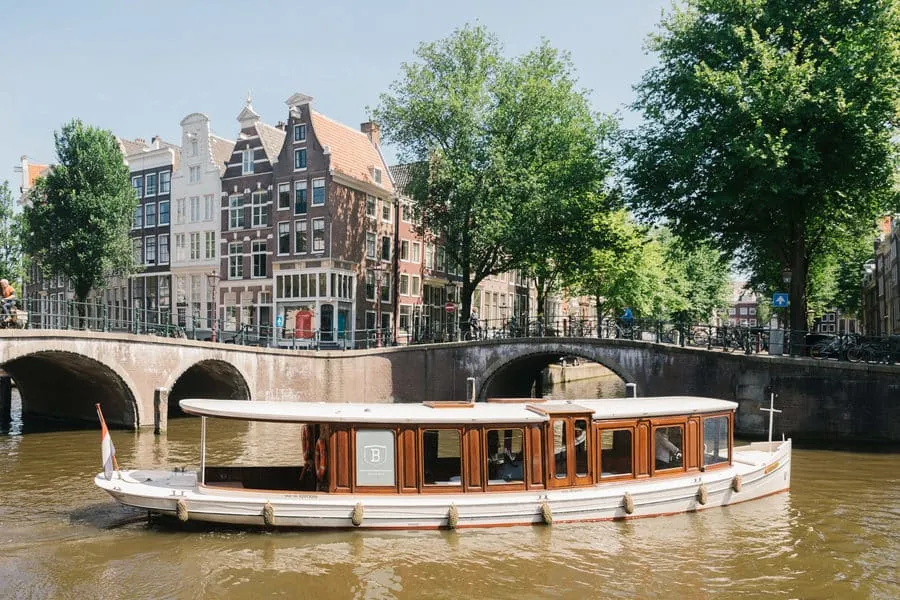
A classic saloon boat on an Amsterdam canal beside a stone bridge and gabled canal houses
Day 4 · Monday 6 September 2027

Amsterdam, the Rijksmuseum and a canal cruise

Canal cruise with drinks & light snacks included Stay:  DoubleTree by Hilton Amsterdam Centraal Station

Enjoy a free morning in Amsterdam. Take a walk, explore a neighbourhood or settle into a café and watch the city go about its day. Lunch is at your own arrangement before we come together for a guided visit to the Rijksmuseum.

The museum brings Dutch art and history into the journey through works in its collection and the stories behind them. After two full garden days, it offers a change of setting and time to follow interests beyond horticulture. Our guided visit provides an introduction, making the experience rewarding whether the museum is familiar to you or this is your first visit.

Looking at art can also sharpen an appreciation of gardens. Colour, light and the placement of forms influence the way a painting is experienced, just as their relationships shape a view through planting. The museum gives us another perspective to carry into the garden visits ahead, while remaining a pleasure in its own right.

We also take a canal cruise, with drinks and light snacks included. The city is seen from a different level as its buildings and waterways pass by, and there is time to relax together after the museum. Dinner is at your own arrangement this evening.

Tomorrow we leave our Amsterdam base, visiting gardens in the east before continuing to Rotterdam.

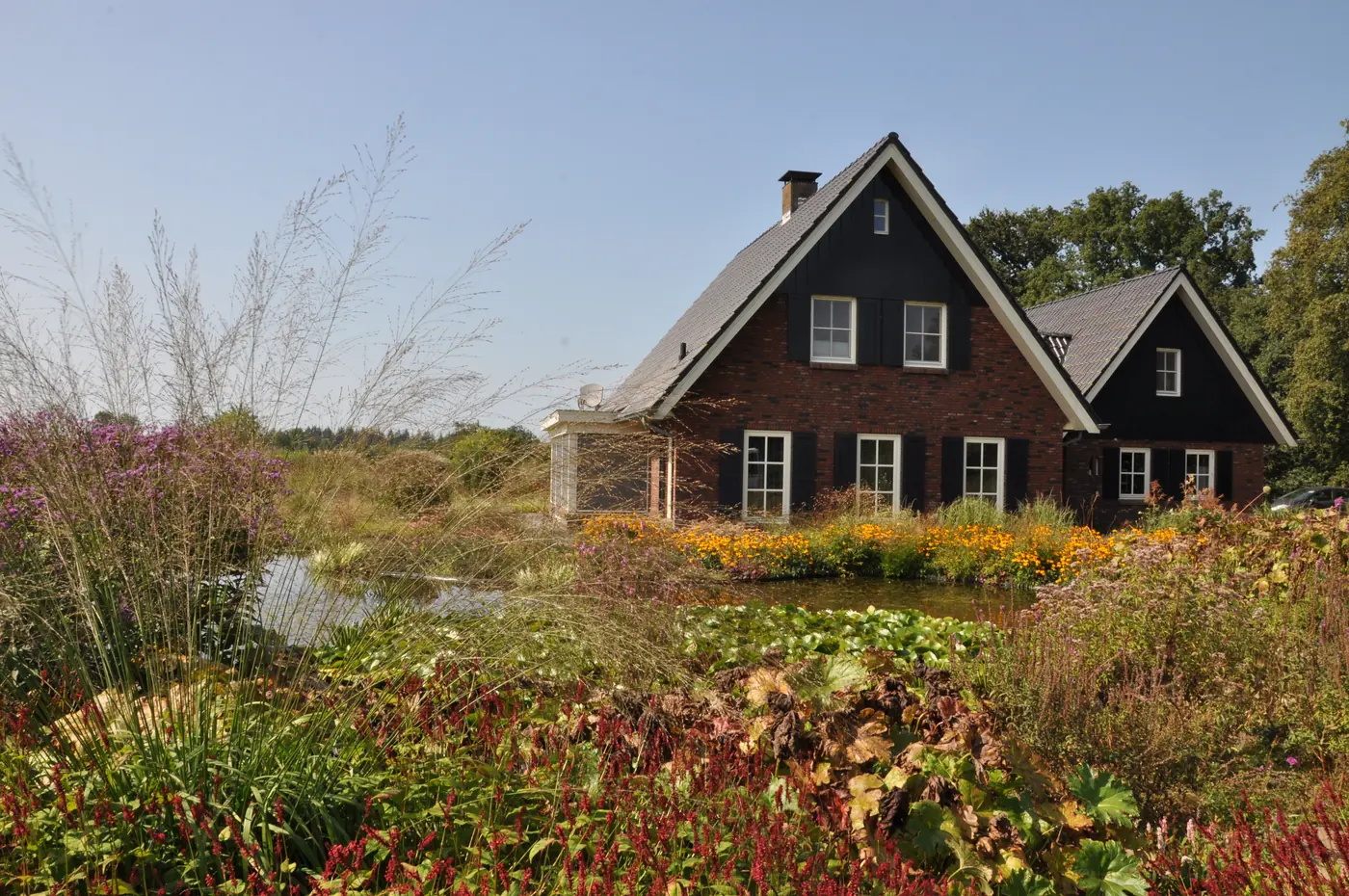
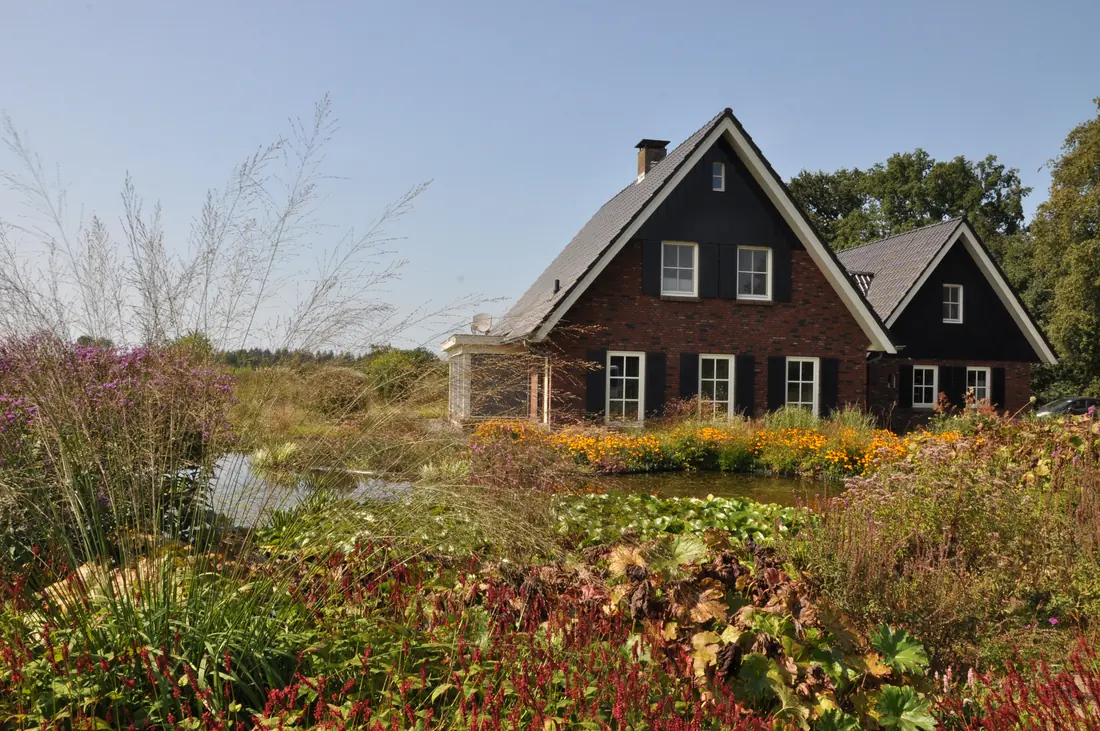
The timber-clad house beside the pond and autumn planting at Groot Daatselaar
Day 5 · Tuesday 7 September 2027

Jelle Grintjes, Hans Gieszen and Yuxian Sun

Lunch & dinner included Stay:  DoubleTree by Hilton Rotterdam Centre

We leave Amsterdam for Jelle Grintjes’s landscape garden in Herwen. His 5,000-square-metre show garden brings together perennials and grasses in combinations ranging from naturalistic to deliberately unexpected. Plants give the landscape much of its character, with differences in height and texture creating variety within the planting.

A relaxed appearance can contain considerable thought. Stronger forms give the eye places to settle, while finer plants introduce transparency and movement. The pleasure comes from seeing the combinations at garden scale, where a plant’s relationship with its neighbours is as apparent as its individual qualities.

Grintjes’s garden gives us time to explore that balance between abundance and composition. Some visitors will be drawn to particular plants, others to the effect of the whole planting. Both approaches can yield ideas, especially when a combination is considered in terms of shape and growth rather than copied without regard to conditions at home.

Lunch is included at Grand Café De Markt in Zevenaar. Afterwards, we continue to Groot Daatselaar in Renswoude, the garden of Hans Gieszen and Yuxian Sun. Their naturalistic planting allows tall and low plants to mingle, creating depth within the same area.

The mixed heights give the borders a different character from planting arranged in a steady rise from front to back. Taller forms appear among lower neighbours, while openings towards the surrounding landscape extend the view beyond the garden. The result invites the eye to travel through the planting as well as across its surface.

Seen together, today’s gardens show how individual naturalistic design can be. The same broad interest in perennials and grasses leads to different choices about mixing, repetition and openness. Those differences make the visits particularly useful for gardeners finding their own way with plants, and enjoyable for anyone who appreciates a garden’s atmosphere.

We continue to DoubleTree by Hilton Rotterdam Centre, our base for the next two nights. Dinner is included this evening.

Late-season borders at Vlinderhof in Máximapark, Utrecht
Day 6 · Wednesday 8 September 2027

Piet Oudolf at Singer Laren and Vlinderhof

Today brings us to the two Piet Oudolf gardens at the heart of the tour. Singer Laren combines planting with contemporary sculpture; Vlinderhof brings an Oudolf garden into the everyday life of a public park. Visiting them together allows us to experience how his work responds to two different places.

At Singer Laren, a former private landscape garden has become a sculpture garden, with Oudolf’s planting connecting the museum, villa and theatre. Works by contemporary Dutch artists introduce fixed forms among plants that develop and change through the seasons. Culture and nature provide a recurring relationship within the garden and its sculptures.

A work may be seen first through planting, then more fully as we approach. Elsewhere, open space allows its outline to stand clearly against its surroundings. The sculpture and the plants contribute together to the experience, with changes in the planting altering the view over the year.

In September, the interest can include flowers still carrying colour and the forms left by earlier flowering. Grasses bring a finer texture alongside more solid stems and leaves. The planting gives us a chance to see Oudolf’s attention to a plant’s whole character, including qualities that remain after its brightest flowering moment.

We continue to Vlinderhof in Utrecht’s Máximapark. Created through a residents’ initiative and maintained by volunteers, this public garden contains more than 15,000 perennials and grasses. Oudolf arranged sunny planting areas, shaded spaces and taller borders within a framework of organically shaped hedges and grass paths.

The garden offers specific examples of the contrasts that make his planting so engaging. Its planting account describes the flat yellow heads of Achillea ‘Moonshine’ beside the purple flowers of Salvia verticillata ‘Purple Rain’ and the open blooms of Geranium ‘Rozanne’. Grasses provide transparency around firmer forms such as Echinacea ‘Fatal Attraction’ and Eryngium yuccifolium. Each brings a different shape and texture to the group.

The tall Eupatorium ‘Snowball’ recurs across the beds, drawing the eye between areas of planting. Hedges give the garden an enclosing frame, while the paths allow us to move around the groups and see them from different directions. A plant that dominates a close view may become a repeated accent when seen across the garden.

These relationships are best experienced on foot. Walking around a bed reveals layers that a single photograph may flatten: plants partly obscuring one another, an opening through stems, or a repeated form appearing farther away. The changing viewpoint is part of the garden’s pleasure.

The volunteer care is also part of Vlinderhof’s story. Planting continues to develop after the design is made, with decisions about maintenance helping sustain its character. The garden’s approach includes retaining dried plants into winter, allowing their forms to remain part of the seasonal experience.

Individual flowering varies from year to year, but the structure, combinations and movement through the garden give us plenty to enjoy. We return to Rotterdam after a day devoted to Oudolf’s work, with dinner at your own arrangement.
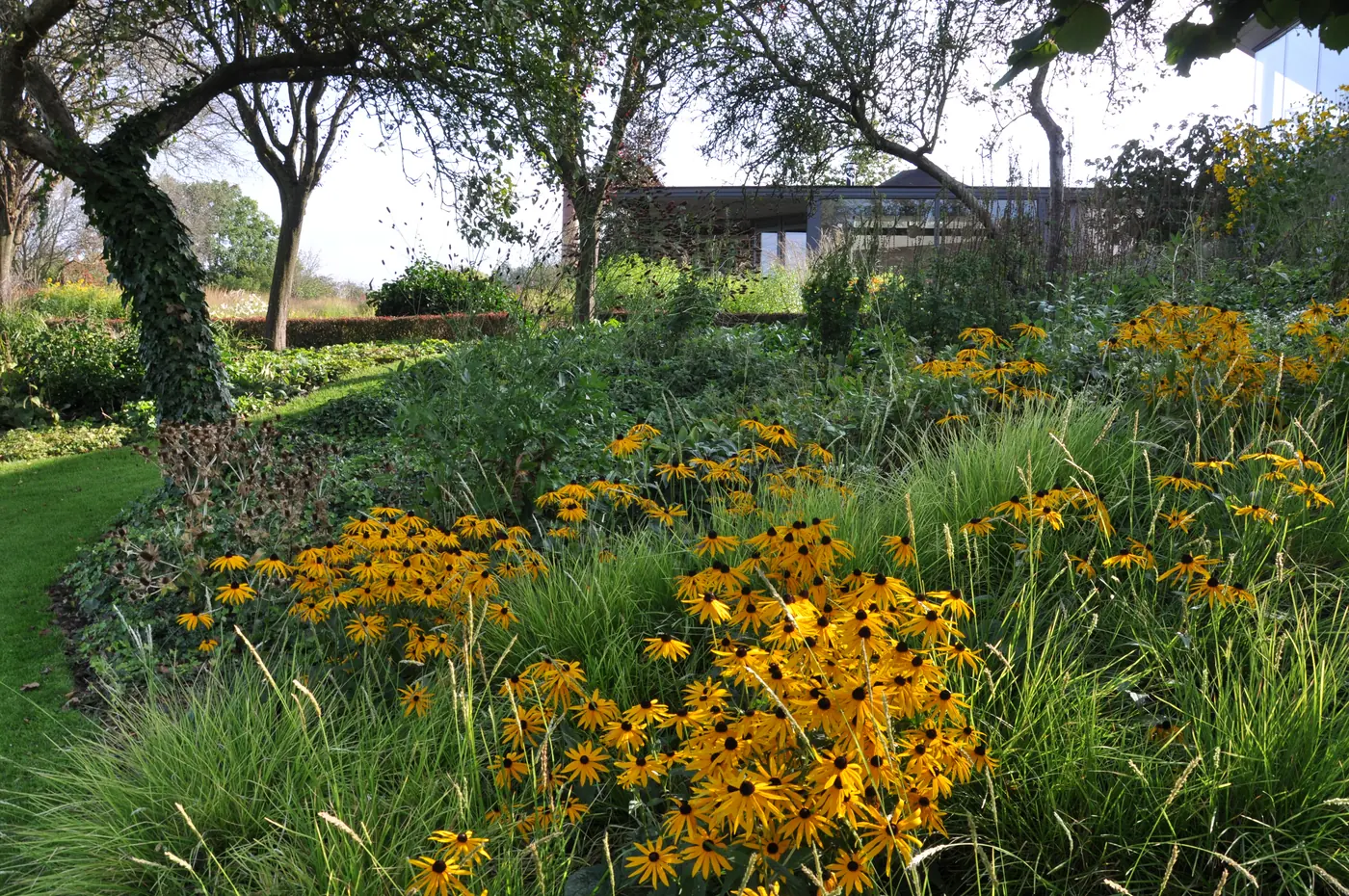
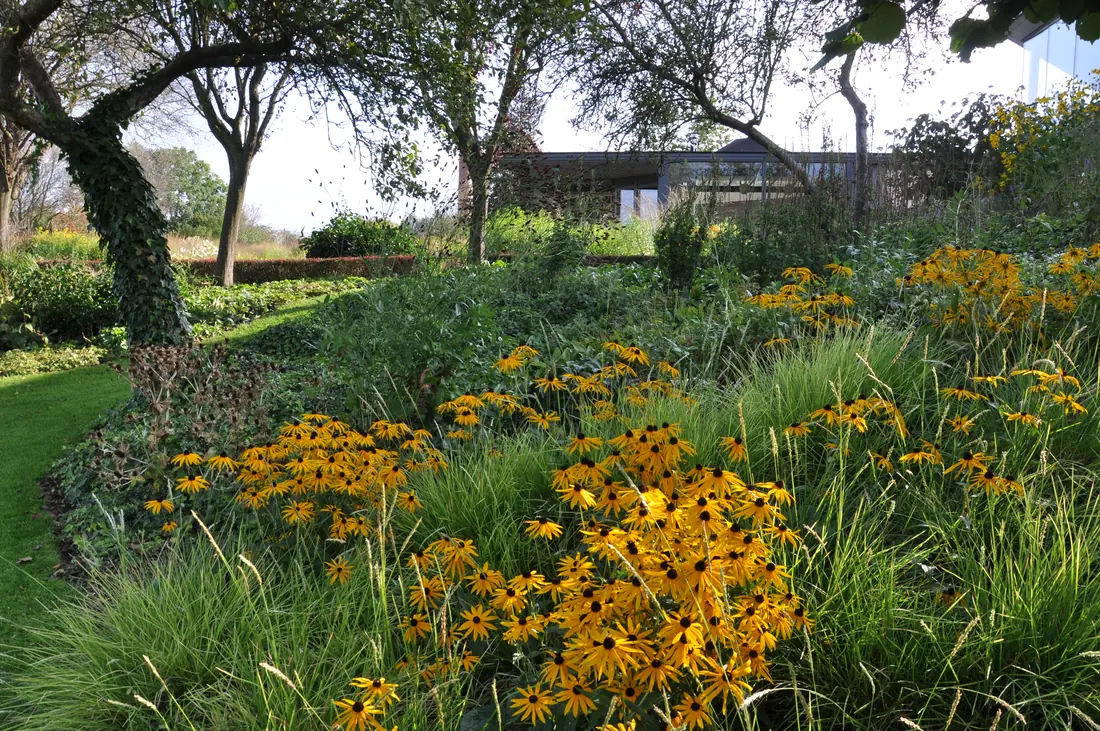
Rudbeckia and ornamental grasses in a late-summer border beneath old fruit trees
Day 7 · Thursday 9 September 2027

Tom de Witte, In Goede Aarde and our farewell dinner

Lunch & farewell dinner included Stay:  Hilton Amsterdam Airport Schiphol

Our final garden day begins at Tom de Witte’s garden. His interest in perennials and ornamental grasses brings another contemporary designer’s perspective to the programme. After yesterday’s two Oudolf gardens, this is an opportunity to enjoy a different response to planting and place.

Layering is an important part of de Witte’s approach. Plants are experienced in relation to those beside and behind them, with their changing heights and textures contributing to the whole. A personal garden also brings the design close to everyday use, where the pleasure of living among plants and the development of the planting are considered together.

By this stage of the week, we have encountered a wide range of gardens. Some visitors may find themselves noticing repetition more readily; others may be drawn to the plants that create depth or to the spaces between them. The final visits bring those observations into another setting and leave room for further discoveries.

Lunch is included at Strandpaviljoen BRAZ before we visit Kwekerij In Goede Aarde. The nursery specialises in border perennials and ornamental grasses, and its own garden shows the plants in mature combinations. Here the qualities of an established plant can be appreciated alongside the range offered by the nursery.

The owners value lasting structure and a long period of interest. Contrasts between substantial and fine foliage, and between different colours, contribute to the garden’s character. Grasses and late-season flowers help carry the planting into autumn. It is a fitting final visit for a journey concerned with the life of a garden beyond a single flowering display.

Seeing plants established together also brings a practical pleasure. A choice made for a home garden can be imagined through its eventual shape and the contribution it might make among existing neighbours. Even when different conditions call for different plants, the relationships within a successful combination can provide ideas to take away.

We travel to Amsterdam for a farewell dinner at Restaurant Blauw. Over our final meal together, there is time to exchange favourite moments and the planting ideas that have stayed with us. We then continue to Hilton Amsterdam Airport Schiphol for our last night.

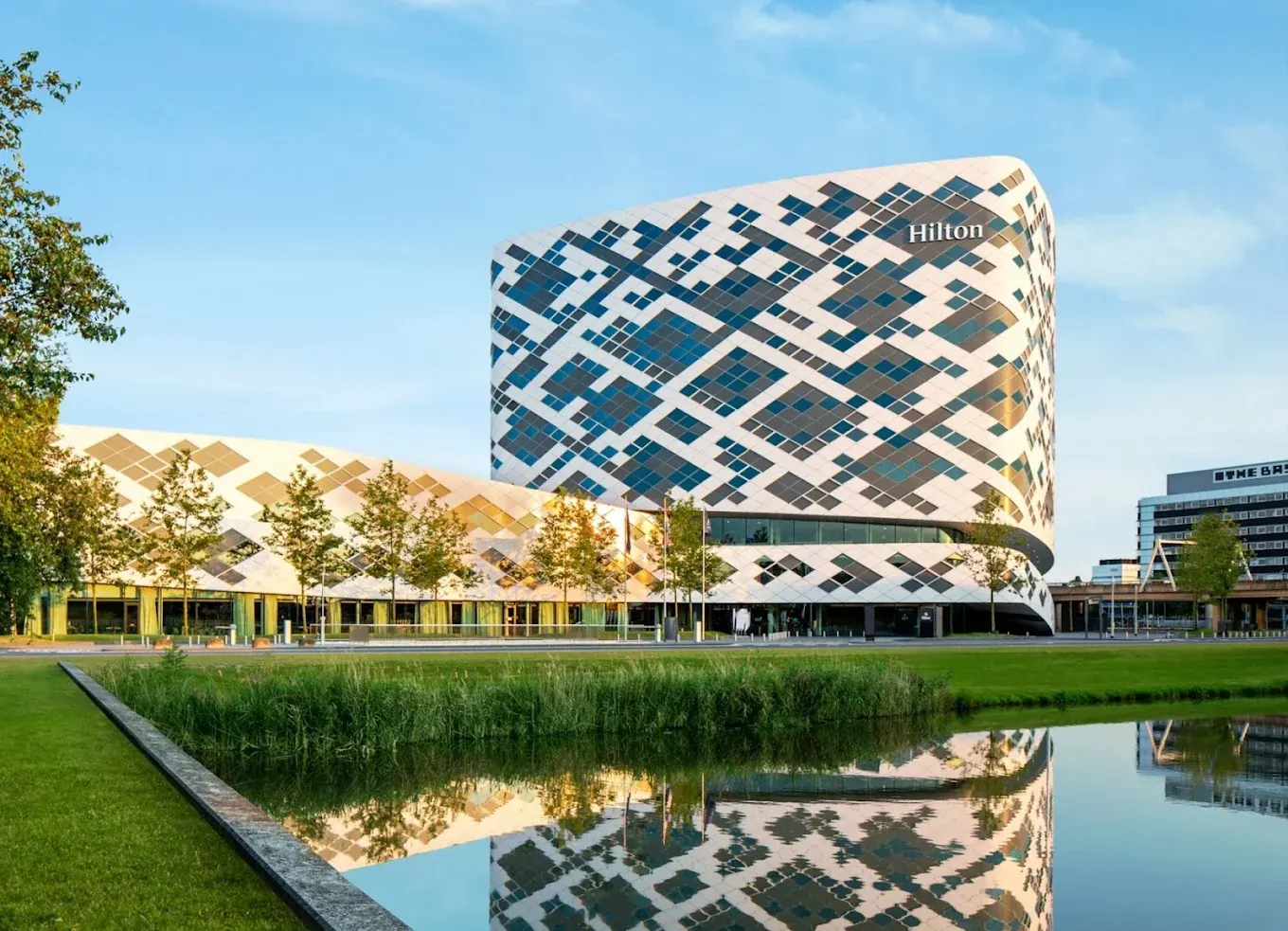
A Hilton hotel with a diamond-patterned facade reflected in the water beside it
Day 8 · Friday 10 September 2027

Departure from Schiphol

Depart from Schiphol according to your onward travel arrangements.

The week has brought together Oudolf’s public planting, the experiments of Mien Ruys, private gardens and the knowledge of growers. You leave with a varied picture of Dutch perennial garden-making, alongside photographs, plant notes and ideas to adapt to your own conditions. The company and conversations along the way are part of the journey too.

Images from the tour

A selection of gardens, planting details and places featured in the journey.

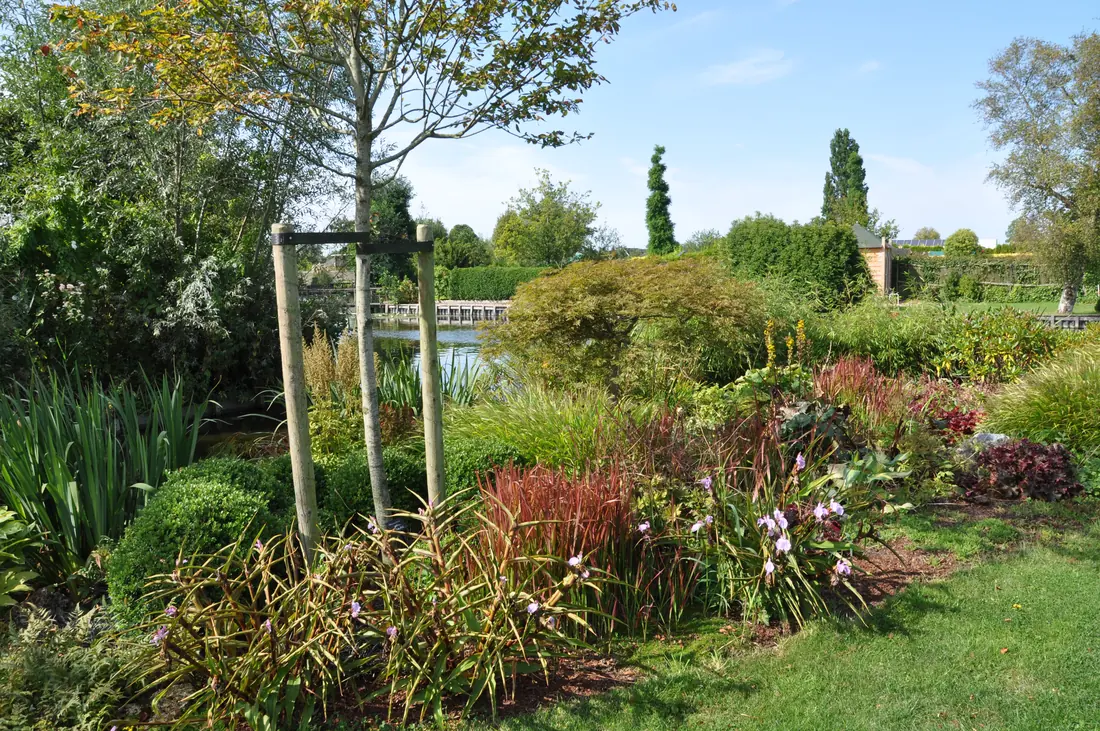
Late-summer perennial planting with asters, miscanthus grasses and developing seedheads
Rudbeckia and grasses in the borders at De Tuin van Fortmond
Pennisetum grasses and eryngium at De Tuin van Fortmond
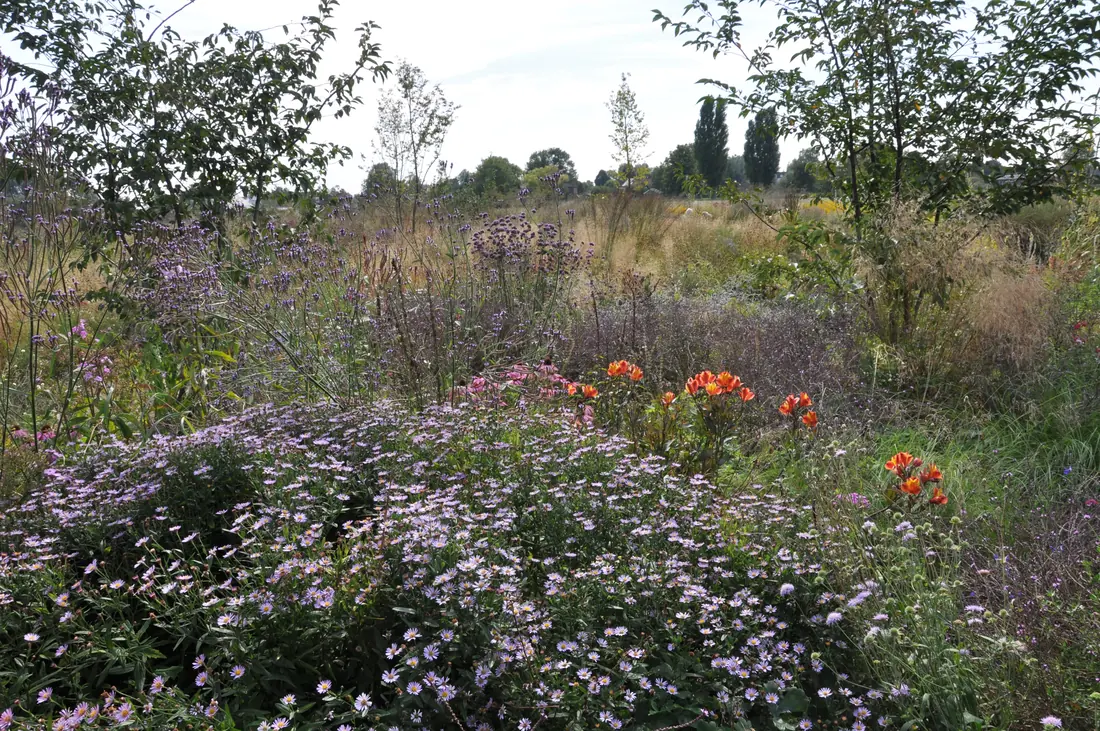
Asters and perennials in the naturalistic planting at Jelle Grintjes' garden, Herwen
The house beside the pond and mixed planting at Groot Daatselaar, Renswoude
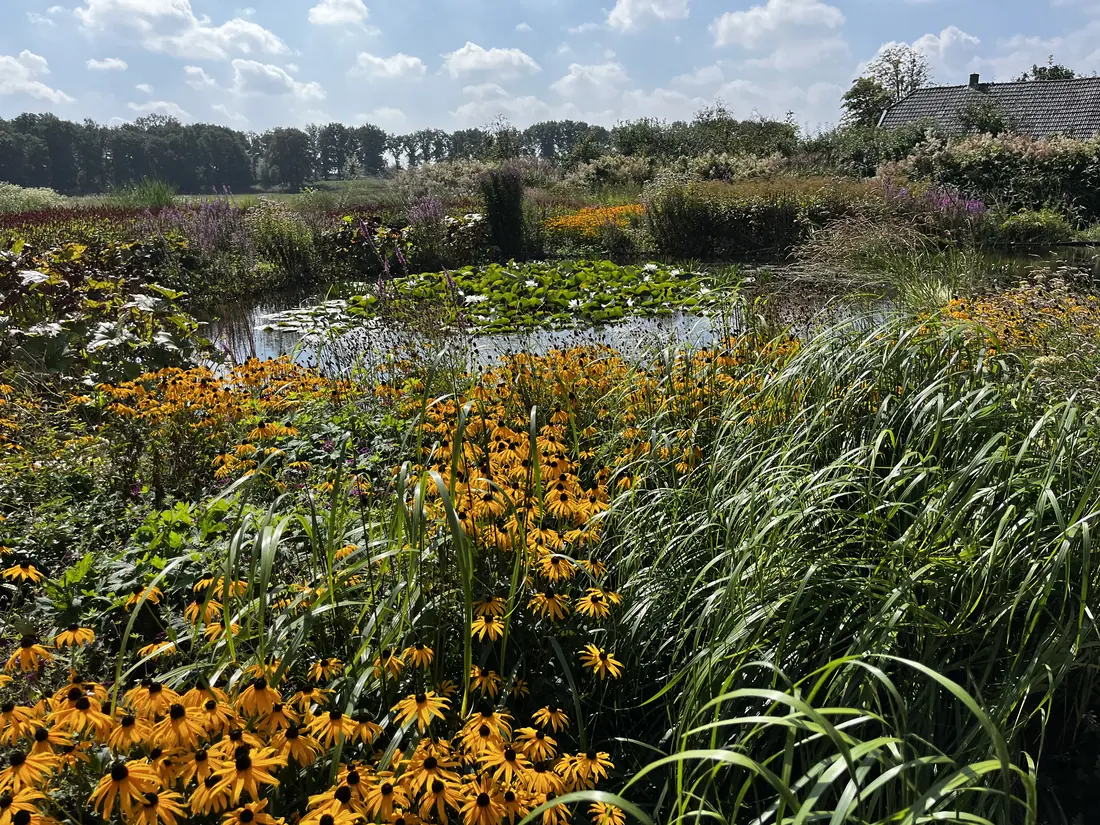
Rudbeckia and grasses above the pond at Groot Daatselaar
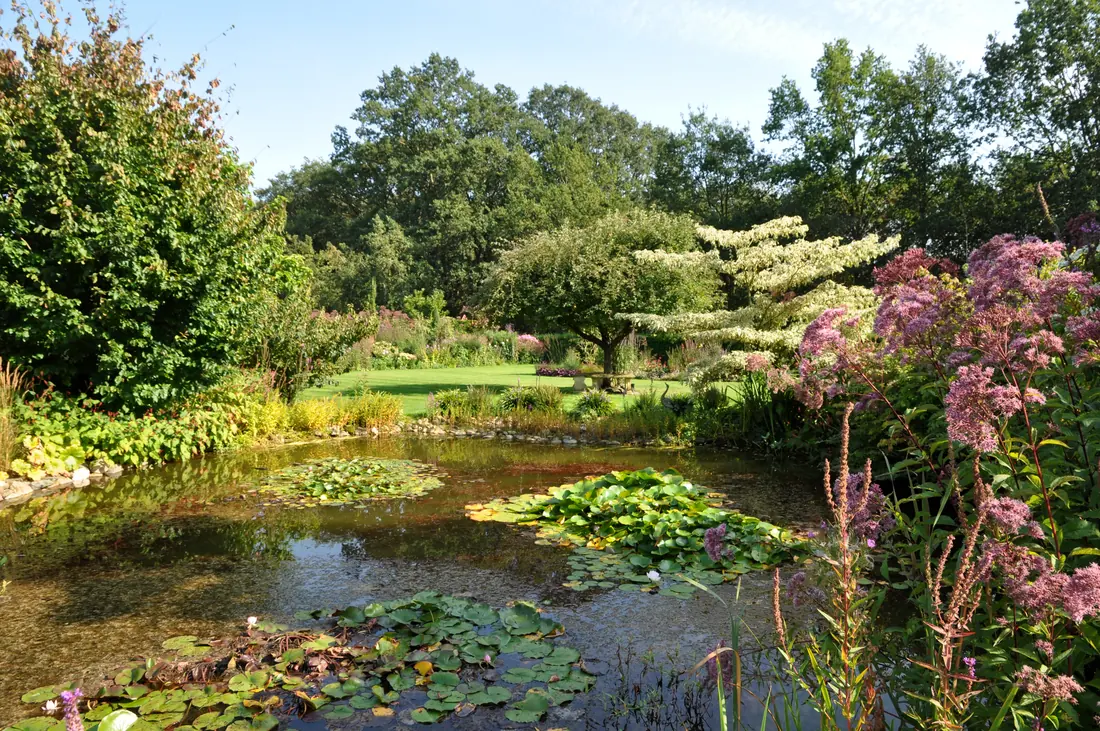
Water lilies and pink Eupatorium beside the pond at Tuin Polhuis, Ermelo
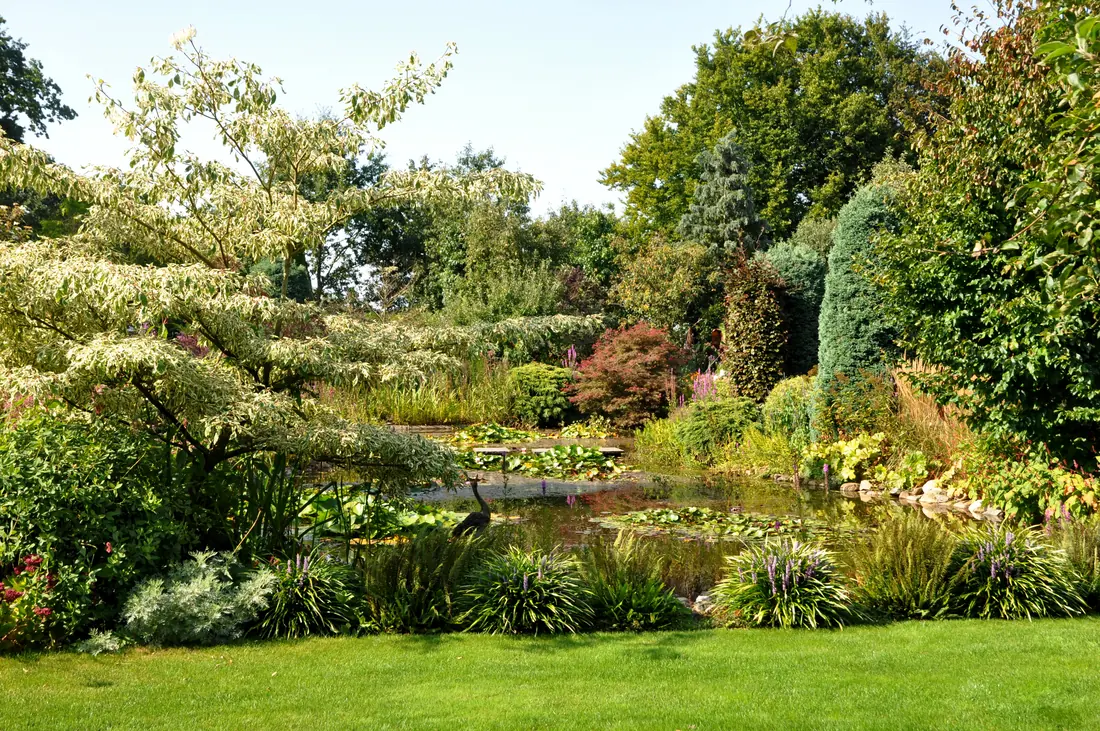
A tiered white-variegated Cornus beside the pond at Tuin Polhuis
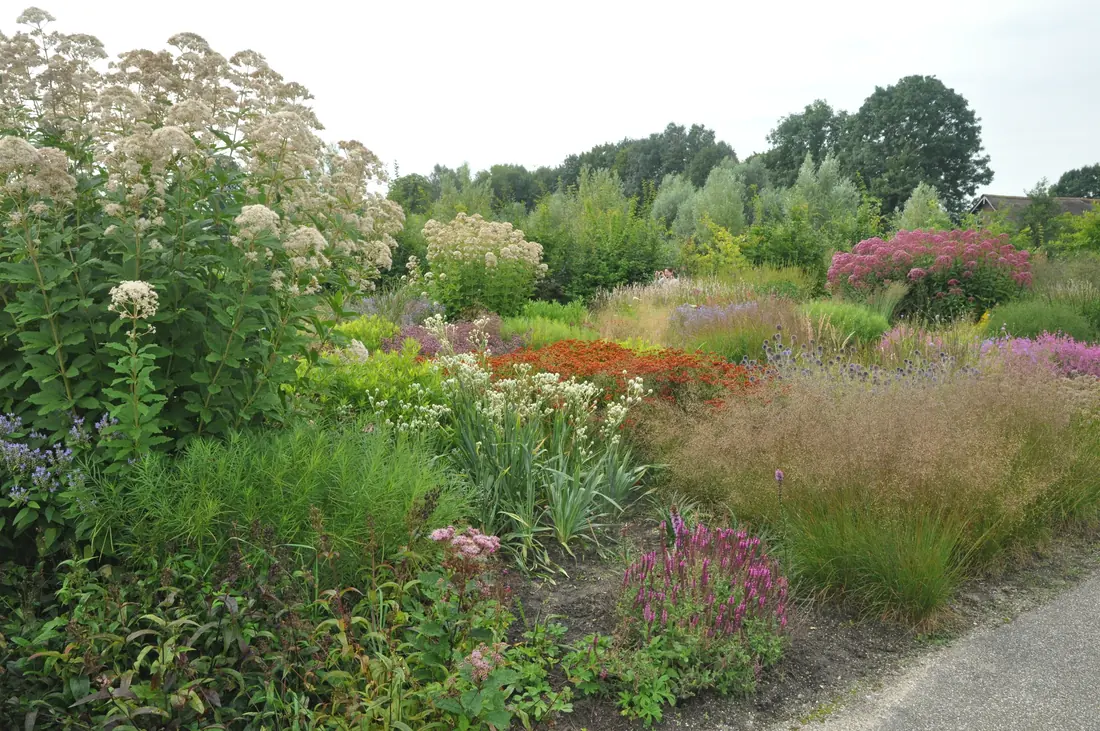
Perennial borders and grasses with trees beyond at Vlinderhof, Utrecht
Planting beside the water at Waterside Garden, Boskoop
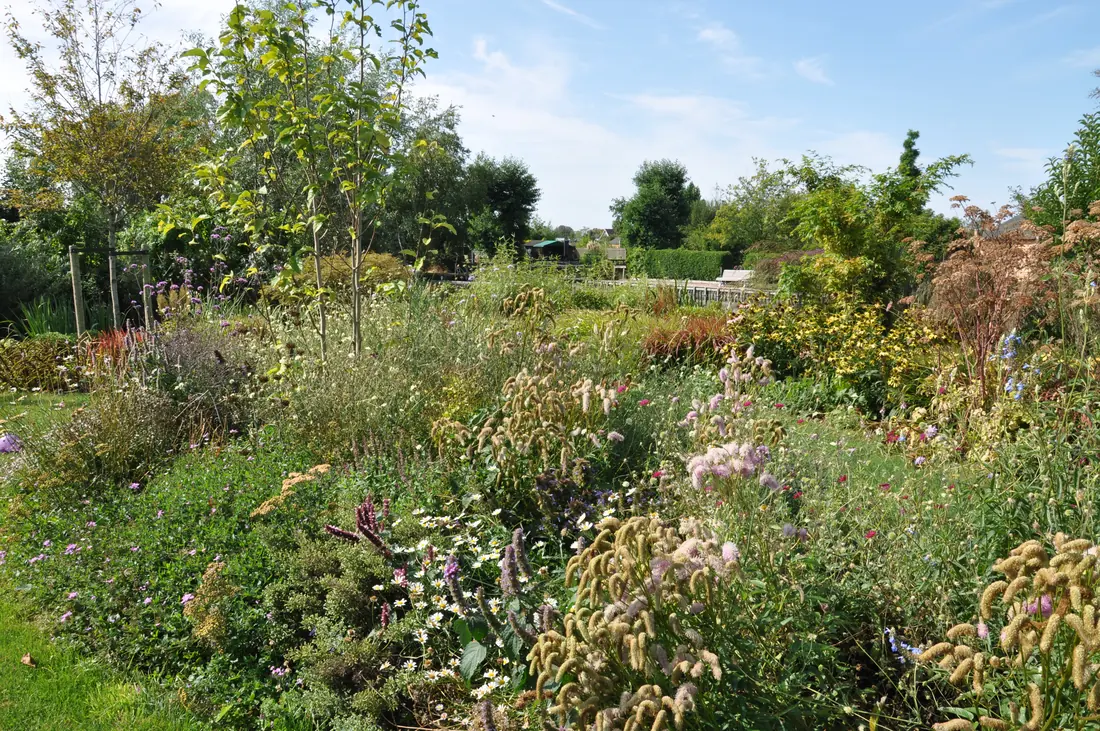
Mixed perennial planting at Waterside Garden, Boskoop
Other garden journeys in the Netherlands

Choose the season that interests you

September brings us into the Netherlands' perennial gardens, with grasses, flowers and developing seedheads contributing to the planting. A spring journey offers a different experience, centred on bulbs and the gardens of that season. Explore our Netherlands programme to choose the setting and time of year that most appeals to you.

Related reading

Preparing for the journey

Read about travelling with a small group and look more closely at Vlinderhof before the tour. Familiarity with the garden's setting can make the visit more rewarding, whether you are interested in individual plants or the experience of the design as a whole.

Suitability

Is this tour right for you?

This tour suits travellers interested in Piet Oudolf, perennial planting and the wider Dutch gardening tradition. Experienced gardeners and designers will find plenty to explore, while companions who enjoy gardens, art and landscape are equally welcome. No specialist plant knowledge is needed.

  • It offers plenty for experienced gardeners and designers, while welcoming anyone who enjoys looking closely at gardens, art and landscape.
  • Garden visits involve regular walking, including grass paths and surfaces that may be uneven or wet.
  • The programme includes full excursion days and longer coach journeys between regions, alongside time in Amsterdam.
  • Art and city experiences form part of the programme, including the Rijksmuseum and canal cruise.
  • Early September planting varies with the season. The tour explores garden structure and seasonal change as well as flowers.
  • Please contact us to discuss walking or boat-boarding requirements before booking if you have particular access needs.
Tour map

Where this tour travels

We begin with four nights in Amsterdam, visiting Lisserbroek, Boskoop and gardens farther east before a city day at the Rijksmuseum and on the canals. Visits to Herwen and Renswoude precede our move to Rotterdam. Singer Laren and Vlinderhof are visited from that base, followed by Tom de Witte's garden and In Goede Aarde, a farewell dinner in Amsterdam and a final night at Schiphol.

Booking options

Dates & Prices

Select a departure date and room type to book your place on this tour.

Departure
3 September 2027
Option
Double, sharing
Price per person
US$5,445
Departure
3 September 2027
Option
Twin, sharing
Price per person
US$5,445
Departure
3 September 2027
Option
Single
Price per person
US$6,720

A non-refundable deposit secures your place. See Booking Conditions.

What’s included

Included

  • Seven nights' accommodation: four in Amsterdam, two in Rotterdam and one at Schiphol
  • The garden and nursery visits listed in the itinerary, including Piet Oudolf's gardens at Singer Laren and Vlinderhof
  • Entrance fees for the scheduled garden and museum visits
  • A guided visit to the Rijksmuseum
  • The Boskoop boat trip and Amsterdam canal cruise
  • Three lunches, on Days 2, 5 and 7
  • Four dinners, including the welcome dinner, hotel dinners on Days 2 and 5, and farewell dinner at Restaurant Blauw
  • Drinks and light snacks on the Amsterdam canal cruise

Not included

  • Flights
  • Insurance
  • Gratuities
  • Drinks
  • Lunch on Day 4
  • Dinner on Days 3, 4 and 6
From US$5,445
Book Now